“The events in Iran are a symptom—of a 20th century disease called imperialism.”
On August 19, 1953, the CIA and MI6 staged a coup d'état in Iran that led to the overthrow of the democratically elected government of Prime Minister Mohammad Mosaddegh. Mossadegh, a popular, modernizing figure, had nationalized Iran’s oil industry, angering US and British oil interests in the region. After the coup, the CIA installed Mohammad Reza Pahlavi — the pro-western “Shah of Iran” — who promptly invited the foreign oil companies back into the country. The Pahlavi dynasty was excessively oppressive, and used the SAVAK intelligence agency, which was created with help from the CIA and Mossad, to control the population and suppress dissent. The Pahlavi dynasty also existed as a neocolony of the west, especially the US and Britain. In fact, while propping up the Shah’s dictatorship, Britain exported most of its arms to Iran. Iran’s national resources were used primarily to enrich the Shah’s court, and for foreign interests to exploit.
In 1979, the Shah was deposed following a popular uprising that came to be known as the Iranian Revolution. The Revolution abolished the monarchy and ended the Pahlavi dynasty. The pro-western Imperial State of Iran was replaced by the Islamic Republic of Iran, with cleric Ayatollah Ruhollah Khomeini assuming its leadership. The Iranian Revolution reconfigured the politics of West Asia, posing an alternative to the Gulf monarchs installed by the west, and continuing the long struggle, in the region, for decolonization. Iran’s revolution also meant full support for Palestine and other oppressed peoples in the region and beyond. The founding and continued existence of the Islamic Republic of Iran, then, has meant a continuous challenge to US (and western) imperialism, especially as it is represented by its proxy, the zionist entity.
These are the reasons the US and its rabid proxy in the region has been trying to destroy Iran since 1979.
Soon after the success of the Iranian Revolution, Palestine Perspectives, the journal of the PLO's Palestine Information Office in Washington, DC, published a succinct and incisive editorial on the Revolution’s origins, causes, and meanings. Titled “Iran, Third World People and U.S. Foreign Policy,” the editorial comments on the North American surprise, bewilderment, and anger at the events in Iran, arguing that racism and Islamophobia have blinded most people in the US to the root cause of the Revolution – and the deep source of the profound anger many Iranians felt towards the United States. That cause, and that source, was US imperialism and its role in repeatedly and brutally crushing the national aspirations and the desires for autonomy of the Iranian people, as well as all people across the Third World.
As the latest unprovoked and violent joint US imperialist-zionist attack on Iran suggests, little has changed since 1979. US and western imperialism continues its monstrous attacks on people fighting for self-determination. But resistance, including Iran’s resistance, also continues.
As the editors of Palestine Perspective pointed out in 1979, “The lesson of Iran… is that the destiny of Third World peoples can not be manipulated. Not indefinitely.”
We reprint “Iran, Third World People and U.S. Foreign Policy” below. And we are sending Iran all solidarity.
Iran, Third World People and U.S. Foreign Policy
Palestine Perspectives
The dramatic events in Iran have triggered, among other things, attacks on Iranians in the U.S. by some Americans, threats by the U.S. government to resurrect the long dead gun-boat diplomacy of the colonial era, and a not insignificant amount of intemperate language in the media (much of it racist) about Islam, the Iranian people and Third World societies. What the dramatic events in Iran did not trigger, alas, is a lot of soul searching by Americans about U.S. diplomacy and the role this diplomacy had played in oppressing peoples, robbing them (through the good offices of indigenous overlords) of their freedom and imposing on them, against their will, regimes responsive neither to their aspirations nor to their national sentiment.
Perhaps Americans should begin by asking themselves why their government, along with the Shah whom it installed in power against the will of the Iranian masses, is so fervently hated in Iran. Americans could then ask if the Iranian people, and their counterparts in Chile, Nicaragua, Palestine, Uruguay, and elsewhere in the Third World, are so unworthy of being the only determining force in their destiny that they need the American government to decide for them their political and social destiny, over their heads, by installing dictatorships in their countries. Americans, above all, could ask themselves if they have the right to be outraged when these people turn around and revolt against this oppression and spontaneously express their rage against it in their own unique way.
There is no question about the brutalities that the Shah inflicted on the mass of Iranians during his reign of terror—brutalities that virtually every sector of the Iranian population, at one time or another, was victim of.
Evidence of the pervasiveness of this brutality was the unity that the population manifested in their call for the ouster of the Shah in the early days of the revolution. The spectacle, after all, of three million demonstrators marching in the streets of one city is an event that had not been seen in human history.
American policy in Iran—a deliberate, calculated, premeditated policy devoid of any hint of innocence or misguidedness—began with the blatant act of the C.I.A.-engineered coup that reinstalled the Shah in power in 1953. Since then, and during the consistent support the American government had given to the Shah’s dictatorship, an adversary relationship was created on the one hand between the ruler and the ruled in Iranian society, and on the other between the Iranian masses and the American government. Not satisfied with having created such an explosively oppressive condition, the U.S. government then proceeded to equip the Shah’s army with the most awesome weapons, in the naive expectation that this will serve U.S. geopolitical interests in the Middle East and indefinitely repress the Iranian people. It trained, with the help of Israelis, the Shah’s dreadfully barbaric Savak secret police, to use the most brutal methods of torture, repression and murder against innocent Iranians suspected of the least forms of dissent. It consented to the Shah’s methods of denying the Iranian people the most elementary rights of freedom. And it winked at, and probably encouraged, the Shah and his family, along with their hangers-on, to amass incredible fortunes by robbing the country of its wealth and well-being.
The U.S. government, unquestionably, had done all that and more, and the crimes of the Shah of Iran constitute a catalogue of ruin that his people had had to endure for well over three decades. Without the support of the U.S. government for the Shah, all of this long suffering would not have been possible.
The dramatic events in Iran during the month of November, 1979, may be no more than a stark expression of the rage that Iranians now feel at the American government for its complicity and direct involvement in imposing an intolerable historical experience of devastation and pain on their country.
One may argue, if one wishes, that this or that tactic should or should not have been adopted by the Iranian government in handling the siege of the U.S. embassy. But one can not argue that the Iranians, in their own genuine and spontaneous way, in a manner consistent with their process of historical transformation, in a flow of energy long suppressed and brutalized, have expressed their rage and revulsion at those whom they perceive as having been responsible for their suffering.
The events in Iran are a symptom—of a 20th century disease called imperialism.
In the Third World, where hundreds of millions of people had suffered from it for centuries, imperialism is a concrete reality that devastatingly affects the everyday lives and everyday concerns of communities of men and women yearning to be free.
Imperialism has not been just the U.S. government’s acquiescence in the barbaric savageries of the Shah of Iran. It is B52’s dropping napalm on Vietnamese villages. It is Anastasio Somoza robbing and pillaging Nicaragua. It is the Camp David Accords and military occupation and torture by Israelis against Palestinians in Palestine. It is concussion bombs dropped by Israel, supplied by the United States, on Lebanese villages. It is the incarceration of well over a hundred thousand political prisoners by Marcos’ regime in the Philippines. It is the terrors of dictatorships in South Korea and Chile. It is the spectacle of street peddlers and street people in the capital cities of Third World countries coexisting with a small, U.S.-supported elite in whose hands is often encapsulated all the wealth and the power in the land.
The lesson of Iran, and there are a lot of lessons for the Western world to be learnt in Iran, is that the destiny of Third World peoples cannot be manipulated. Not indefinitely.
“Iran, Third World People and U.S. Foreign Policy, Palestine Perspectives,” Palestine Perspectives, 2 no. 7-8, November/December 1979.



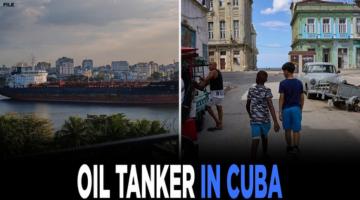
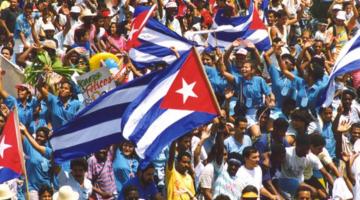 Condemnation of the U.S. blockade against Cuba must be translated into acts of solidarity to defend the nation that has done so much for the world.
 In this week’s segment we hear about Cuba, the challenges of Caribbean unity, and resistance to U.S. efforts to destroy the revolution. But we begin with Iran and discuss how its defense capabilities…
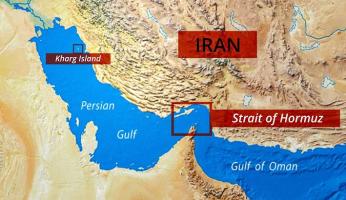 Iran is a more formidable foe than the US anticipated. The U.S. goal of regime change failed because of Iran's military power and determination to defend itself. In Washington the "Secretary of War"…
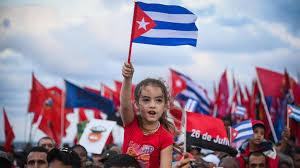 The United States has attempted to defeat the Cuban revolution from its earliest days and for more than 60 years has embarked on sabotage, economic coercive measures, and now a three-month long…