It's The Real News Network. I'm Sharmini Peries, coming to you from Baltimore. School segregation is making a comeback. Just last week, the New York Times, for example, featured a story about a town's effort in Jefferson County, Alabama, to secede from the school district in order to create a predominantly white and wealthy school district for themselves.
A recent study conducted by EdBuild, a non-profit group that advocates for fairer primary education in the U.S., shows that secession efforts like this have been increasing significantly since year 2000. Back in 1954, the Supreme Court issued a landmark Brown versus Board of Education decision which outlawed school segregation. However, a later decision in 1974 partially reversed this, stating that school integration cannot occur across school district lines.
As a result, many states have made it easier for communities to secede from their school district, thus allowing them to segregate again. This violates the 14th Amendment of the Constitution, which provides all of us equal protection under the law. Joining me now to take a closer look at this is Glen Ford. Glen is the Executive Editor of the Black Agenda Report. He's also the author of the book "The Big Lie." Glen, thank you so much for joining us.
GLEN FORD: Thanks for having me.
SHARMINI PERIES: So let's start off with this trend that is being set in many school districts and communities seceding from their district and establishing their own, thus creating another segregated school environment. What do you make of this, Glen?
GLEN FORD: Well, it shows that you don't have to wave a Confederate flag or have a statute of Robert E. Lee to effectively secede, at least to secede from your schools, your court-mandated school desegregation order. That's what the white citizens of Gardendale, Alabama are trying to do. Their city, which is mostly white, is situated within a county, Jefferson County, that's with the center of it being Birmingham, that is covered by a school desegregation order. Although, the state of Alabama has lots of laws that encourage so-called local control, and local control is in the South a euphemism for segregation, federal law, federal desegregation orders trump local law.
So, what the good, white citizens of Gardendale, Alabama are trying to do is get out from under federal law. If they succeed in doing this, and escaping the Jefferson County school desegregation order, that will certainly encourage similarly situated majority white communities to try to do the same. It's not just a legal battle. Since 2000, the U.S. Justice Department has released about 250 communities from their desegregation orders, effectively so. That is, the Justice Department treats these 250 communities as if they have already uprooted schools, a Jim Crow education, and therefore should be treated as if they're released from the order.
The result, of course, is that these communities inevitability go back to resegregate themselves. That is the purpose. So we see that the momentum for school desegregation has gone out not only from the courts which are now dominated by right-wing judges, but also from the executive branch and certainly from the Congress.
SHARMINI PERIES: Right. Now, this is allowed to happen largely because in the United States, school funding is mostly based on local property taxes. Give us a sense of how the tax system works and why this contributes to the kind of segregation that they're able to act upon now.
GLEN FORD: Well, there's a symbiotic relationship between the market economy and those tax laws. That is, rather wealthy, and that usually goes with white, in a relatively speaking communities, which can put more money into their schools, then attract like-minded white folks. But when you're under a school desegregation order, you can advertise your town as having "the best schools" which really means the whitest schools.
And what then occurs in this market economy in a racist country is that folks of light complexion and affluent means stay away from those communities and they deteriorate economically. So, the good white fathers of places like Gardendale believe that they're not being racist by trying to escape these school desegregation orders, that they are simply fighting for the survival of their town, making their town attractive to new blood, meaning new money, and white blood, by reverting to local control. Local control being a euphemism for segregation.
SHARMINI PERIES: Right. Now, according to the organization I was referring to, EdBuild, they report that, I believe, 50 most segregating school district borders, the wealthier districts have an average of, say, 9% poverty rate, while their lower income neighbors live with an average poverty rate of roughly 46%. This begs the question, was the U.S. education system established and designed to favor the rich? I can imagine what your answer is going to be to that, Glen, but gradually this has become the way, and now we have President Trump in place who has appointed Betsy DeVos, who seems to be determined to accentuate these inequalities. What can you tell us about these policies?
GLEN FORD: Well, two things. I'm glad you brought up history. Yes, the United States educational system, to the extent that it existed, was for the rich. The South had no public education system whatsoever until after the defeat of the Confederacy and the rise of largely black Reconstruction governments which created public school systems in the South. In terms of DeVos, DeVos is ,of course, one of the main actors and certainly one of the wealthiest ones in the so-called movement for private school vouchers.
Private school vouchers were born as a political movement in the South when counties in states all across the South during what was called "massive resistance," massive resistance of school desegregation, threatened to close down their public schools rather than integrate them, and some of them did. In Prince Edward County, Virginia, the schools were closed for more than a year.
But Alabama made the same threats, and in those places where the whole system was not closed down, most of the white kids left the system and entered private schools. These were called "segregation academies," and the presence of these segregation academies as reactions to court-ordered desegregation created the demand for public funding of vouchers to pay for private schools. This is one of the reasons that the so-called movement for private school vouchers has never caught on in the black community, because it from the beginning, was associated with segregation academies.
SHARMINI PERIES: All right. Glen, I thank you so much for joining us today, and shedding some light on what's going on here. Obviously a pattern developing we should keep our eye on. Thank you so much for joining us today.
GLEN FORD: Thank you.
SHARMINI PERIES: And thank you for joining us here on The Real News Network.

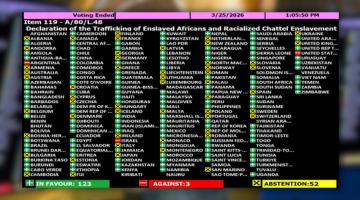
 In this week’s segment, we discuss the impact on the voting rights of Black people if the SAVE Act is signed into law. But we begin with a discussion of an historic vote at the United Nations which…
 Kwesi Pratt Jr. is General Secretary of the Socialist Movement of Ghana.
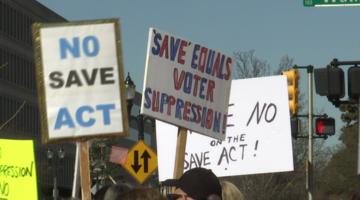 The SAVE Act would require proof of U.S. citizenship to be presented in person in order to register to vote in this country and would disenfranchise millions of people who are currently able to vote…
 Russia finally makes good on promises to help Cuba, but its level of commitment is unclear. The left are clearly immobilized, even as Iran demonstrates how to fight back.
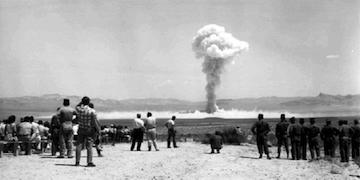 “We are not freeing ourselves from centuries of imperialism and colonialism only to be maimed and destroyed by nuclear weapons.”