A soldier aiming a gun at a target, accompanied by a reminder that actions have consequences. Image Credits: Lee Je-seok/Redesigned by Cephas
Global Africa must oppose military aggression. Global Africans must stand with the Iranians and prepare to navigate the ripple effects of this war on African peoples.
Originally published in Pambazuka News.
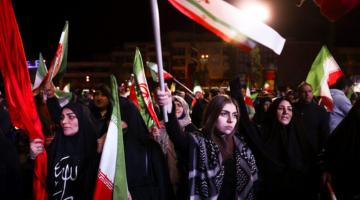
The people of Iran deserve to live free from imperialist wars. They are not fodder in imperialist wars of domination. Pambazuka voices its solidarity with the people of Iran as they stand up to the military aggression against their country.
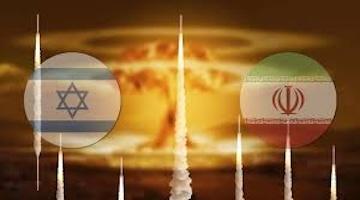
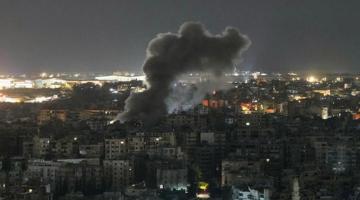
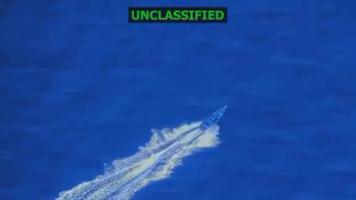
For days in February 2026, the US began a buildup of military presence in the Arabian Sea and the Persian Gulf. In January, the US Submarine Abraham Lincoln, which has been operating in the South China Sea, was redirected to West Asia. The USS Gerald R. Ford (CVN-78), which has been part of the illegal military campaign to capture Nicolas Maduro in Operation Absolute Resolve, was also deployed to West Asia in this aggression campaign codenamed Operation Epic Fury.[1] These floating airbases have been attacking Iranian naval assets, killing innocent civilians, epitomized by the killing of the school girls, while Israeli fighter jets have been bombing government structures and assassinating Iranian leaders. This joint operation (Epic Fury and Roaring Lion) will therefore leave in its wake more casualties, including innocent children, other civilians in Iran and the Gulf, and military personnel.
Following the Israeli and US missile bombardments, Iran responded with strikes across the Gulf that hit the United Arab Emirates, Saudi Arabia, Qatar, Kuwait, Bahrain, Jordan and Iraq. With the promises of deeper military attacks from Trump and Secretary Hegseth, who declared, “This was never meant to be a fair fight and it is not a fair fight. We are punching them while they’re down, which is exactly how it should be,”[2]– and the resolve of the Iranian Administration to fight back, the region is being plunged into a war that would not have to be fought if sovereignty were respected and international law governed the operations of states.
Bring Back International Law
For the past 80 years, the world has run on international rules. These rules are not in favour of Africa per se nor has Africa in its calculations. It however provided some context and moral grounds around which states could be called out for disregarding common rules, laws and international expectations. Amid the shaky foundation and continuing disregard for its tenets, militarily weaker nations could have some breached branch to hold onto while demanding and contributing to the envisioning of a just and equitable global order. In the absence of rules, the impunity of aggressive states will not even have to be in the conclave of the CIA and allied operatives. This state of affairs will lead weaker states to align themselves with superior armed states, generate internal military-industrial complexes to arm themselves as individual states or in coalition with similar weaker states, or become puppets of the more militarily destructive force. In a situation where less militarily armed states have advantage of geography, better acquaintance with terrain, access to necessary fire power, effective warfare tactics, strong nationalist and people support, as was the case in Vietnam and to a considerable extent, Cuba, subservience might not be an outcome.
Destructive power is not held by a single actor. Others possess comparable capability, yet may avoid direct confrontation to prevent mutual annihilation and to avert catastrophic harm to humanity. The fact that many states are armed to the teeth generates deep fear of escalation, and this fear risks opening a new period of competitive rearmament carried out in the name of security but undermining real safety.
In these circumstances, all states and peoples (especially those from the Global South) must reaffirm the central role of international law and ensure that it is applied consistently and without favour to any state or alliance. Selective enforcement breeds impunity, weakens collective security, and erodes the norms that protect human life.
The United Nations and the Security Council must therefore move at once to halt the military action in Iran. By enforcing the Charter and pressing for a path toward de-escalation and negotiation, they can begin to restore the authority of the institution and honour the promise that gave the United Nations its legitimacy.
IAEA being used by Israel
When the world established the International Atomic Energy Agency (IAEA), the calculation was in part that nuclear resources will be used in a responsible way, and nuclear non-proliferation might be ensured. What it has stopped short of is the question of nuclear disarmament by the superpowers who possess this destruction weapon and use it as a leverage to prevent being attacked or threaten any weaker power that might muscle up to challenge a nuclear possessor in any way. The question that remains and adds to the many inequalities observable in the geopolitical space is how some states have the moral right to possess nuclear weapons but deny other states the chance to own one.
For years Africa supplied the world with uranium but no country in Africa could be allowed to pursue a nuclear ambition. Apartheid South Africa for its racial and settler colonial ambitions had nuclear weapons from the 1970s but gave them up in its dying days.
Israel is a member of the IAEA and maintains a policy of nuclear ambiguity though there is hardly any ambiguity that it is the only nuclear power in West Asia. That it fears the possibility that a nuclear Iran might nuke it out of existence and whether that might happen remains in the military banters that continue to phrase the struggle for dominance that characterizes Israeli and Iranian politics in West Asia.
Israel’s participation in IAEA technical cooperation—focused on nuclear safety, emergency preparedness, and agricultural uses of nuclear technology—functions as a key channel through which the Zionist entity shapes normative standards within the Agency.[3] By remaining active in these non-sensitive areas, Israel, with the connivance of its allies, is able to influence technical discussions and guide program outcomes in ways that support its military/strategic interests while avoiding scrutiny of its own nuclear posture.
Iran’s nuclear development, by contrast, did not originate from an internal drive alone. It was first set in motion through external support: in 1957, the United States launched Iran’s nuclear program under the Atoms for Peace initiative during the reign of the Shah. This historical starting point highlights the long-standing role of major powers in cultivating nuclear capabilities in the region.
The rhetoric of uranium enrichment for military purposes in Iran that underlies IAEA conversations has provided the context where the policing of nuclear assets by nuclear states has become a pretext to pursue the desire to dominate oil resources and grant the highest concessions possible to finance capitalists in the energy sector. The US-Israel alliance against Iran thus fulfils multiple imperial goals including US dominance in West Asia, projection of brute force, access to oil, and enrichment of finance capitalists in America. The desire for control is insatiable to the point where religion is weaponized in support of military aggression and solemn moments of religious activities become the ripe time for assassinations and murder.
Murder of Ayatollah and Inciting Religious Intolerance
The United States prides itself as a secular country. In this war, the conservative forces in the USA have deployed "holy war" rhetoric to justify the bombing of Iran. Inside the US military there are new disputations, with a combat-unit commander telling non-commissioned officers at a briefing Monday that the Iran war is part of God’s plan and that President Donald Trump was “anointed by Jesus to light the signal fire in Iran to cause Armageddon and mark his return to Earth.” While biblical texts describe an Armageddon war, those deploying this rhetoric will hesitate to tell us if Trump – or another leader – is the anti-Christ whose rule must end to herald an Armageddon. They also shy away from the symbolic, spiritual and other contested interpretations across different denominations in the Christian faith.
The disregard of international law in the abduction of Nicolas Maduro of Venezuela has been dressed-up in the Americas, but the resurgence in targeted assassination of political leaders of other countries that have been witnessed in Africa in post-independence years has been a new normal in the US-Israel war against opposition, and the so-called anticipatory (pre-emptive) strikes in self-defence. In a long list of assassinations against Iranian leaders including Soleimani and Iranian scientists, the act of murder has reached a point where religious moments have become the very time a religious authority will be assassinated.
At the time of Ramadan, the minimal expectation would have been that religious rights be upheld and expressions of faith could thrive. It is at this time of fasting that the religious leader of Iran has been killed. In the spirit of humanity, one does not need to agree with the politics and practices of a leader of a sovereign country to recognise that a calculated aggression and assassination need not belong in a “civilised” world.
In these fasting times where Muslims and Christians are humbling themselves in acts of faith, fundamentalism in religious expression is a threat to a world that is yet to forget a united front and tolerance among peoples of all faiths. It is unfortunate that assassinations during the exercise of religious duty can be celebrated as defeats of any evil force, shaitan or satan.
The war on Iran and its ripple effect will not only affect oil prices. It portends danger for a regional war that can leave West Asia with a wound that cannot be sufficiently healed in many years even if a treatment is initiated to manage the sores.
Implications for Africa
The ongoing war has implications for global energy markets, trade, food supply chains, and cost of living for many people in the world. Africa cannot stand unconcerned about the events in the Strait of Hormuz. The concern of the continent about the war is however on all fronts, not just the implications from the Strait of Hormuz.
The alliance to plunder and exploit African resources and the people does not only operate in the energy and economic sectors. It also works in security and related oppressive measures.
The imperial alliance that ensured the destruction of Libya has formed a different coalition that is rendering military havoc from the Americas and West Asia. Africa’s reliance on foreign security technologies is a strategic trap. This dependence is being primed for weaponization, allowing the owners of these proprietary softwares and machineries to dictate African policy through the threat of technical abandonment or systemic sabotage. The pervasiveness of the Pegasus in African security architecture and its use in repression and abuse of basic political and people's rights already provides leverage to the supplier about how bold African countries make comments about the ongoing war.
The contractual obligations that underlie the purchase of security software must guarantee a professionalism that minimizes the security vulnerabilities of the user nation to the supplier country. These agreements and expectations may not prevent anticipatory strikes and could become the basis for threatening security breach of the user country in the name of the supplier’s national security interest.
The security exposures of the users are one thing, and how the software is used on the continent is another. States are able to use such software to monitor their own citizens, activists, and persons of interest within and outside the country. Yet, that same software is also being used by the suppliers to monitor African governments on behalf of imperialists.
The surveillance capabilities that have been mustered in Gaza is now explored in targeting Western Sahara activists. With these “results” how could the users of this software firmly oppose the military actions of the owners and allies of the owners of the software? At best, political rhetoric about opposition to the war on Iran, if it is ever muttered, will have to be carefully balanced with backdoor diplomacy that appeases the supplier.
The potential regionalization of the war has consequences for the gulf region and areas in Africa that host US military bases where retaliatory missiles can reach. In the first retaliation, the United Arab Emirates, Saudi Arabia, Qatar, Kuwait, Bahrain, Jordan and Iraq were targeted. Where next will the missiles travel to when the war intensifies?
The geopolitics in the Horn of Africa and the Red Sea region place African countries inadvertently in the crosshairs of the various missiles that will target assets in the region. As explained in Serekberhan’s article in this issue, the meddling of UAE, Turkey, Israel and US was an example of the revolving door of intervention that preceded the explosion of the war in Sudan and can be replayed in the imperialist book of divide, conquer from within, and loot.
The assets may not necessarily belong to America. The increasing role of the UAE in logistics in Africa and military and other activities of the country and its Gulf siblings in that region is a recipe that can serve war in a region that has witnessed enduring conflict. The UAE militarily supports the RSF with weapons regardless of the armed embargo on the reactionary force that is committing genocide in Sudan. UAE military, financial and diplomatic support of the Haftar faction has been crucial in the sustained destruction of Libya. The country has provided advanced military hardware, conducted drone strikes, and provided logistical support which ensures an atmosphere that allows for the looting of Libyan resources without accountability, and the killing of Libyans.[4]
This expansion is anchored by DP World’s aggressive monopolisation of strategic port concessions, which serves as the logistical backbone for an exploitative, militarised resource-extraction model. By embedding its strategic assets so deeply into the African landscape, the UAE has effectively transformed the continent into a secondary theatre of its rivalry with Iran. Consequently, these Emirati-controlled hubs now function as proximate targets for Iranian ballistic capabilities, shattering the illusion that the West Asian conflict remains geographically confined. African states must now reckon with the reality that Emirati "investment" has imported a foreign war to their shores. Remittances from the Gulf Cooperation Council are a major component of the financial inflows to the African continent. In 2024 alone, Africa received over $95 billion in remittances, a considerable volume of which was from the high number of African workers in construction, domestic, and healthcare sectors in the Gulf region.[5] The stop in remittances flow from the Gulf will add to the loss caused by illicit financial flows through gold smuggling, diamonds, and other minerals shipped from conflict zones in Africa to West Asia. Africa and particularly countries benefiting from the remittances, might lose out doubly if the war persists.
African Reactions to the War on Iran
Global African posture in this conjuncture will be crucial in forging the kind of international solidarity needed to confront the increasing military aggression of the US from the Americas to Asia. Africa should stand in solidarity with Iran and the Iranian peoples.
Since the new phase of the war began, there have been several reactions across Africa. These reactions border on the economic implications of the war, geopolitics, and security cooperation or dependence. Four main responses are observable across Africa: warning against western militarism; condemnation of Iran for its counter-strikes against Gulf states; silence; and “strategic” carefulness looking forward to the settling of the dust on the war.
Silence among African states has manifested in two ways. There are states who have decided not to comment on the war at all, and those engaged in selective commentary that refuses to mention the US-Israel aggression.
The African Union (AU) has issued two statements in the wake of the war. In the first statement, it warned against the threat of further escalation to global instability, energy markets, food security and implications for African economies under conflict and economic pressure. The AU through its Chairperson urged restraint, de-escalation, diplomatic dialogue anchored by the Sultanate of Oman, and respect for international law and the UN Charter.[6] The second statement however had a punchier and firmer response in relation to the Iranian strikes. That statement “strongly condemns the missile and drone attacks carried out by the Islamic Republic of Iran” in sovereign self-defence against US assets in “sovereign territories of Bahrain, Qatar, the United Arab Emirates, Kuwait, and Saudi Arabia.”[7] It called out the action as constituting “clear violation of sovereignty and territorial integrity.” While the fear of the risk of further escalation and the need for restraint might have shaped the subsequent response, the tone could have been unequivocal across the statements. Clearly, in both cases, there had been breaches in sovereign territories and territorial integrity, and there was the need for immediate de-escalation as the military buildup in the Gulf began. The AU response was thus taking a middle ground between warning against American-led hostilities and condemnation for Iranian retaliation. The leadership of the AU and Africans must realise early that there is no middle ground in this war.
Africa’s responses have been shaped by ports and Red Sea routes, remittances from the Gulf, oil prices, security partnerships with the US and Israel, and placatory attempts to maintain relations with both the US and Iran.[8]
One thing is very clear in this war: there can be no middle ground. The people of Africa must take a principled position. One either supports military aggression or one opposes military aggression. Global Africa must oppose military aggression.
Endnotes
[1] https://www.forbes.com/sites/petersuciu/2026/02/20/us-navy-supercarrier…
[2] https://www.yahoo.com/news/articles/pete-hegseth-declares-iran-not-133442887.html;
[3] Statement by Moshe Edri, Israel Atomic Energy Commission. IAEA 69th General Conference. September 2025. https://www.iaea.org/sites/default/files/25/09/gc69-statement-israel.pdf
[4] On UAE lethal drone strike see https://www.bbc.com/news/world-africa-53917791; See other supports https://boycottuae.org/blogs/the-uaes-role-in-libya-from-military-inter…
[5] https://www.africafc.org/our-impact/our-publications/state-of-africa-infrastructure-report-2025; See also
Remittances as development finance: Africa’s overlooked billions.
https://issafrica.org/iss-today/remittances-as-development-finance-afri….
[6] https://au.int/en/pressreleases/20260228/au-commission-press-statement-…
[7] https://au.int/en/pressreleases/20260228/statement-auc-chairperson-esca…
[8] https://www.theafricareport.com/410557/africa-picks-sides-in-the-us-isr…



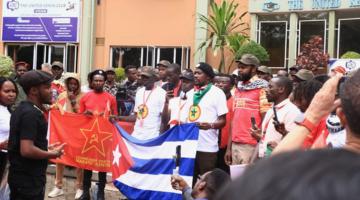 With the economic strangulation of Cuba by the United States, African progressive organizations and movements are calling for broader continental solidarity.
 “...it is like a knee-jerk reaction in the U.S – this consistent, insistent and persistent anti-Caribbean policy in the U.S. from 1776 to the present.”
 Most of the world would be at greater ease if Iran had a nuclear bomb.