BAR Book Forum: Elizabeth R. Baer’s “The Genocidal Gaze”
In Southwest Africa the Germans devised the methodology which they would re-use in the Holocaust thirty years later.
“When the Germans killed 80,000 Africans with impunity and without reprisal, the German population back in Europe became inured to the idea of genocide.”
In this series, we ask acclaimed authors to answer five questions about their book. This week’s featured author is Elizabeth R. Baer. Baer is Research Professor in English at Gustavus Adolphus College. Her book is The Genocidal Gaze: From German Southwest Africa to the Third Reich.
Roberto Sirvent: How can your book help BAR readers understand the current political and social climate?
Elizabeth R. Baer: As I write this, on June 1, 2020, cities across America are burning in response to the murder of George Floyd. The reader of the Black Agenda Report might well ask: how can Elizabeth Baer’s book, The Genocidal Gaze: From German Southwest Africa to the Third Reich, make a difference? The rage that people of color are expressing today results not just from this death, but from many deaths at the hands of police, and from 400 years of cruelty to black bodies.
The history of such treatment, and analysis of that treatment, can deepen our understanding of the rage and the protest in the streets, and the need for such protest. The concept of the gaze, which is the central trope in The Genocidal Gaze, is this: if one group of people looks down upon another group, and deems them of lesser value, or as subhuman, or as bestial, then that gaze can become murderous, genocidal. That Minneapolis cop deployed such a gaze upon George Floyd, believing him to be expendable, believing he could murder Floyd with impunity, without punishment. Believing he could murder him on television and get away with it.
Such a gaze, I argue, is what the Germans brought to their colony in German Southwest Africa (now Namibia) in the late 1800’s. They embraced an ideology that saw Africans as subhuman, as having no history, no religion, as having failed to utilize the land for the purpose of civilization. And thus, they believed they had a right to take the land and to exterminate its previous inhabitants. And that is what they did: their military leader, General Lothar von Trotha, issued an extermination order which called for the genocide of two indigenous peoples, the Herero and the Nama. Between 1904-1907, the Germans set out to intentionally kill these people through military action, starvation and thirst, forced labor, rape, and disease. They engaged the Africans in battle, chased them into the desert where they could not sustain life, and locked them into concentration camps and a death camp. Here the Germans devised the methodology which they would re-use in in the Holocaust thirty years later. No international sanctions were imposed on the Germans, no punishments for the 80,000 Africans whom they killed in the first genocide of the twentieth century. And so the Germans were emboldened to murder again, and to justify such murders—this time of six million Jews and five million other victims—with the genocidal gaze, with the assumption of the inferiority and expendability of these people, too.
What do you hope activists and community organizers will take away from reading your book?
The Genocidal Gaze is an original and challenging discussion of such contemporary issues as colonial practices, the Nazi concentration camp state, European and African race relations, definitions of genocide, and postcolonial theory. Moreover, the book demonstrates the power of literary and artistic works to condone, or even promote, genocide or to soundly condemn it. The transnational analysis provides the groundwork for future studies of links between imperialism and genocide, links among genocides, and the devastating impact of the genocidal gaze.
I would hope that activists and community organizers would be able to use the concept of the gaze and the other insights of the book to provide a context for the folks with whom they work. It is crucial to remember in our work together that America was founded upon the enslavement of Africans and the genocide of Native Americans. That the gaze of the founders of the country, in the accepted framework of racial hierarchy, deemed African Americans and Native Americans to be inferior, expendable. That gaze still pervades our institutions and our police forces.
We know readers will learn a lot from your book, but what do you hope readers will un-learn? In other words, is there a particular ideology you’re hoping to dismantle?
Settler colonialism, with its assumptions about who has the right to take land, would be a fine ideology to unlearn.
Racial hierarchy, too, which purports to provide a scientific scale of the value of different human beings is another ideology to unlearn. It is closely associated with settler colonialism.
Neocolonialism, which is a form of economic control of former settler colonies, is also a pernicious ideology to be unlearned.
Who are the intellectual heroes that inspire your work?
Among my many heroes, I will name two:
First, the African-American author Toni Morrison, who wrote books about slavery (Beloved), the plight of African-American women (The Bluest Eye, Sula) and the degradation of the lives of African-Americans over the centuries. Her use of language in all of her fiction is exquisite. Awarded the Nobel Prize in 1993, Morrison served not only as a model for her community but also her books taught many non-Black Americans the profound damage caused by racism.
Second, Hendrik Witbooi, a Nama chief and an African revolutionary. Witbooi returned the genocidal gaze of the Germans with a brilliant gaze of resistance from 1884, when the Germans arrived in his land until his death, at the age of 75, while on the battlefield fighting the Germans. He kept an archive of his correspondence and journal entries which demonstrates he was all the things that the Germans said Africans were not: he had a history and a religion, he understood the threat that the Germans represented to his people and to Africa, and he fought gallantly to preserve his freedom and culture. His archive has been translated and is available in English as The Hendrik Witbooi Papers.
In what way does your book help us imagine new worlds?
To imagine a world is a process of both deconstruction and reconstruction. To deconstruct racial hierarchy, we must first understand its roots and its historical implementation. To reconstruct a new world, we must engage youth, envision anew the legal and education systems, equality, the economy, customs, beliefs, and cultures.
Imagining a new world can lead to a negative and even dangerous result. When the Germans killed 80,000 Africans with impunity and without reprisal, the German population back in Europe became inured to the idea of genocide. It was discussed in German newspapers, in popular fiction, and in the Reichstag, the German congress. Many Germans accepted the idea of racial hierarchy that serves as a rationalization for extermination of other human beings.
Thus, this colonial genocide made it possible for the Germans to imagine and accept other genocides. And indeed, thirty years later the Nazi Holocaust occurred (1933-1945) which met little resistance among German citizens. The Nazis envisioned a new world in which certain people, the so-called subhuman, the disabled, the homosexual, must be eliminated.
It is my hope that readers of The Genocidal Gaze will be better able to identify and root out the deadly gaze that results from racial hierarchies. Eliminating this form of perception, which can lead to impunity, police violence, the justification of inequality, and even of genocide, will be a plank in the foundation of a new world. I am pleased that the University of Namibia Press has reissued The Genocidal Gaze in an affordable African edition, so that descendants of the Herero and Nama people there can use the book to better understand their history and to envision a new world.
Roberto Sirvent is Professor of Political and Social Ethics at Hope International University in Fullerton, CA, and an Affiliate Scholar at Yale University’s Interdisciplinary Center for Bioethics, where he directs the Race, Bioethics, and Public Health Project. He is co-author, with fellow BAR contributor Danny Haiphong, of the book, American Exceptionalism and American Innocence: A People’s History of Fake News—From the Revolutionary War to the War on Terror.
COMMENTS?
Please join the conversation on Black Agenda Report's Facebook page at http://facebook.com/blackagendareport
Or, you can comment by emailing us at comments@blackagendareport.com







 In this week’s segment, we have an update on the US/Israeli war of aggression against Iran from a journalist reporting from Iran. But we begin with two organizers of the Pan-Africanism Summit Against…
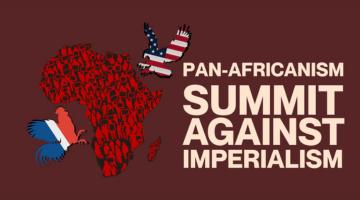 The Pan-Africanism Summit Against Imperialism (PASAI) will be held on May 11 and May 12 in Nairobi, Kenya. It is organized as a counter-summit to the France-Africa summit taking place in Nairobi at…
 Navid Zarrinnal is an Iranian journalist and host of The Colony Archive podcast. He joins us again from Iran to discuss the fragile "cease fire," Trump's threats, the Strait of Hormuz, and how Iran's…
 Beliefs in white supremacy and manifest destiny are at the heart of Donald Trump’s actions and his appeal to millions of people.
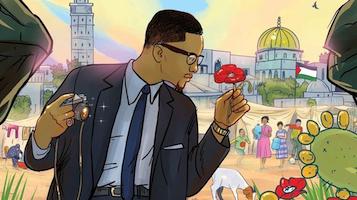 “The ever-scheming European imperialists wisely placed Israel where she could geographically divide the Arab world…and also divide the Africans against the Asians.”