Capitalism’s accelerating crises demand a pan-American labor revolt against Trump’s plundering, bipartisan imperialism, and the neoliberal NAFTA. José Carlos Mariátegui’s century-old warnings are ones we must heed and build working-class internationalism to replace a dying empire with true solidarity.
The accelerated crises of the capitalist world-system bring into relief the antagonistic contradictions with which labor is faced on a world scale. Speaking from the United States, I hope to diagnose these crises and provide a ‘pan-American’ solution which privileges internationalism, labor solidarity, and a path out of the crises. Despite decades of neoliberal propaganda preaching the values of the free market and the ills of state intervention, we can see that Donald Trump is proceeding along the same lines as previous administrations precisely through increased privatization of State assets, and the simultaneous use of the State as a vehicle for said privatization.
The anti-China tariffs, DOGE, and the new tax bill which was recently passed are examples of state control on behalf of the capitalist class. All of these interventions have one aim: the further concentration of wealth in the hands of a few business titans (Musk, Bezos, Thiel, and Ellison come to mind). A majority of Americans now have a negative view of “Israel”, and all the while, the U.S. and Canadian ruling classes continue to send billions of dollars worth of weapons and military aid to the genocidal colony. This is also despite the call of certain US unions, representing 6 million laborers to place an arms embargo on the Zionists. Yet, certain sectors of unionized labor cling to their pro-Democrat electoral strategy, arguing that the status quo of the NLRB and other institutionalized labor forums will save us from the coming crisis.
This could not be further from the truth. On the other hand, while certain union presidents and executives embrace Trump’s supposed ‘America First’ strategy–which lacks the coherence to even be called a strategy–the rank and file suffer from declining market share, increased prices for basic goods and services, and outright repression and censorship in the form of arrests and job loss for speaking out against the foreign policy of the U.S. regime. While modern crises require modern solutions, I propose that we can look to the past to find inspiration which can help us formulate answers. Jose Carlos Mariategui–a Peruvian Marxist of the early 20th century–examined these very same issues in his series of lectures titled History of the World Crisis. Although written 100 years ago, they contain kernels of truth which we should not be afraid to examine and analyze, for they present us with a path forward.
This essay will begin by examining the current crises of the capitalist world-system in more depth, focusing on the declining hegemony of the imperialism of the Triad (US, EU, and Japan). Then, the speeches and lectures of Mariategui will be analyzed in order to explain how many of these crises are not new. Finally, a ‘pan-American’ thesis will be presented as a path forward. This serves as a continuation of my previous article, “Whole Process People’s Democracy: The Path Forward”.
If all history is in fact nothing but the history of class struggle, then we need to understand that the ruling class possess a class solidarity and class consciousness which we as workers, intellectuals, and artisans are struggling to forge in the crucible of Trump’s America. There is a tech boom and the creation of many ‘silicon valleys’ across the U.S. in the form of various hyperscale data centers. Despite the seemingly unified face of the ruling class, the existence of such a tech boom–by the very nature of such speculative financial bubbles–entails competition between varying capitalists. The current Musk-Trump split–although nothing more than a Vaudeville play designed for media consumption–highlights the split in the ruling class. There is a race to build the most data centers, a race to exploit raw materials in space, a race to exploit every corner of the world.
Mariategui, writing in the 1920s, was watching the beginnings of capitalist internationalism’s flourishing (“globalization”). His remarks remind us that even in the most rabidly nationalist and xenophobic states, there is a need for capitalist internationalism in the form of exploiting the labor of the global south. The wealth of Elon Musk, for example, is tied to workers in lithium mines in Bolivia. Without lithium, Tesla cannot make their electric car batteries. Thus, in 2019, prior to Musk’s formal ascension to the government, he famously stated ‘we can coup whoever we want’ during the failed attempt to overthrow President Evo Morales and the Movimiento al Socialismo (MAS).
The crisis of world capitalism is more acute today, and even Trump’s nationalism and ‘America First’ sentiments entail an internationalism of the ruling class. The Democrat “Abundance” agenda also proposes a divorce from trade unions and an orientation towards the tech oligarchy. There is an internationalist strategy of the U.S. and European ruling class to contain China, and this is done through tariffs and economic coercion. Thus, we can see that the North American ruling class is responding to both real and assumed issues in the form of China’s peaceful rise, an economy detached from material production, a decline in military might and prowess, and the slow and gradual devaluation of the U.S. dollar. Yet, their strategy of propping up “Israel”, attacking Russia via Ukraine, placing tariffs on China, and enforcing terror upon their own civilians shows us that they only have blunt instruments of repression and no political will to actually solve anything. In the words of Mariategui, the war(s) not only left millions dead and injured, but also destroyed the economy. “These problems are different aspects of the same thing: the capitalist order’s decay, hastened by the war. The war has destroyed an enormous amount of social wealth”. The internationalism of the working class, then, should be the solution to which we look to rebuild this social wealth for the many, not the few.
Among the trade and craft unions of the United States, there exists dual tendencies as well. On the one hand, there is the misleadership of the unions which is cozied up with the contractors and the government. On the other hand, there are the rank and file workers who do not feel that their union leadership or the government represents them, and who desire more for themselves. We must be vigilant to the changes going on in the world and organize strategies to put forward a distinctly working class program of change. As Mariategui stated over 100 years ago:
“In this chaos, in this conflict, the Western world hangs in the balance. Its political institutions do not correspond to the new economic reality. A part of its conservative forces speak out for a program of audacious reforms which would gradually transform society. Another fears that concessions to the revolution, once started, would be impossible to stop. And, therefore, they attempt to resist. The proletariat needs to pay attention to this conflict’s progress.”
It bears a striking resemblance to the United States in 2025. As such, Washington under the Trump regime should be considered as the conservative force which seeks ‘audacious reforms’; whereas the Democrats fear any concessions to a revolutionary program led by the workers because it would wrench away the wealth from their pockets. Hence, the ‘Abundance’ agenda. The Trump economic policies are an attempt to wrestle away gains from the working class and rake money into Wall Street pockets. The fallout from Trump’s tariffs is already hurting working people.
Mariategui’s insistence that the ‘political institutions do not correspond to the new economic reality’ rings true today. The U.S. constitution allows for and encourages the pillaging of wealth in an upward flow. It is totally formulaic and procedural to the point of absurdity. Chinese scholar Zhang Weiwei describes three so-called ‘genetic defects’ of the Western democratic model. Firstly, he argues that the dumping of money into politics and the abuse of social media trends by the ruling class emphasizes the irrational side of people’s thought processes and creates feedback loops which reinforce existing power structures. Secondly, the overinflation of ‘absolute individual rights’ at the expense of social and economic rights enables a system where individualism runs rampant and no concrete changes can be made; a corporation and a worker have the same, mutually conflicting rights. A klansmen and his terrorized victims have the same, mutually conflicting rights. Finally, Weiwei argues that ‘omnipotent procedures’ dominate the U.S. legal system. In this country, reforms to the political system require constitutional amendments, but the process needed to bring about amendments are shrouded in prohibitive laws and norms. In this procedural maze, Trump is attempting to manipulate the already existing flaws of the constitution to wrest total power to the office of the executive, which he already did in his first term with a flurry of executive orders. This chaos is where the unions and other organized instruments of the working class should insert themselves in order to craft a new political reality.
The North American Free Trade Agreement (NAFTA), a continuation of the ‘Monroe Doctrine’, is up for renegotiation in 2026. NAFTA has been part of what United Auto Workers (UAW) President Shawn Fain calls the “free trade nightmare”. The renegotiation should serve as a platform for craft and trade unions to demand better wages and conditions for Mexican workers, as well as workers in the southern states of the U.S., who suffer from low wages, low unionization rates, and a lingering racial caste system. NAFTA has destroyed agriculture in Mexico and the United States; in Mexico, the government is forced to import food staples such as corn, beans, and squash when they were the original peoples to master these crops and feed their entire nation with them. In the United States, farmland is being replaced by hyperscale data centers, solar energy fields, and battery plants for electric vehicles. The profound–and uniquely yankee–irony being that battery plants for EVs and solar fields are renewable energy sources which are poisoning the water and destroying our food sources.
So what is Pan-Americanism in this context? It is fighting for better wages and conditions for Mexican workers, it is abandoning the main destructive elements of NAFTA, and it is abandoning the paternalistic attitude of the Monroe Doctrine in favor of joining multilateral trade platforms such as Alianza Bolivariana para los pueblos de Nuestra América (ALBA) or Mercosur. These trade forums, founded by Cuba and Venezuela encourage equal exchange and economic prosperity in the Americas. With unequal exchange traded in for commerce, travel, trade, and business on an equal footing, the North/South divide in the Americas can give way to a project of economic prosperity and peace. Latin America has already signaled its shift towards China in the context of a belligerent United States. The port of Chancay in Peru, built by a joint Peru and China partnership, is set to bring billions of dollars of commerce to the southern cone. Brazil has already shifted its orientation massively towards the east across the pacific.
The social movements in Latin America are also riding the popular wave of pro-indigenous pan-Americanism in its most radical form. The Movement of Landless Rural Workers (MST) in Brazil has made a stand against Zionism and towards popular development across the continent. As stated in my previous article on Whole Process People’s democracy, Bolivia is leading the way when it comes to indigenous rights, with their plurinational state ushering in popular development and giving the natural resources back to the people of Bolivia.
Solidarity with protestors in Los Angeles (part of Mexico just over a century ago) is imperative as well. While immigration has long been used in this country as a source of cheap labor to exploit, we must also recognize the harsh truths. If yankee imperialism was stemmed in Latin America, and there were no CIA backed coups against democratically elected leaders, immigration would be stemmed. Anyone who has worked in construction or in a restaurant kitchen knows that many of the immigrants in U.S. cities do not believe in an “American Dream” and would rather be living in their own country, unharmed by Yankee imperial violence and economic instability.
A polycentric America, from Vancouver to Torres Del Paine is possible. An America where people centered development is possible is more than achievable. The crux of the issue is the Monroe Doctrine and Yankee imperialism which linger. Yet, we know them to be paper tigers.
Hanna Eid is a Palestinian American writer, researcher, and Union electrical worker. His writing concerns mainly imperialism and anti-imperialism in west Asia and west Africa.


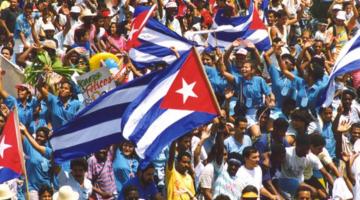 Condemnation of the U.S. blockade against Cuba must be translated into acts of solidarity to defend the nation that has done so much for the world.
 In this week’s segment we hear about Cuba, the challenges of Caribbean unity, and resistance to U.S. efforts to destroy the revolution. But we begin with Iran and discuss how its defense capabilities…
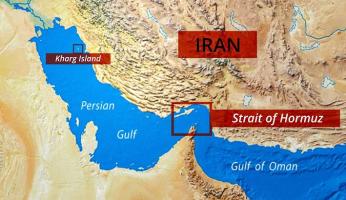 Iran is a more formidable foe than the US anticipated. The U.S. goal of regime change failed because of Iran's military power and determination to defend itself. In Washington the "Secretary of War"…
 The United States has attempted to defeat the Cuban revolution from its earliest days and for more than 60 years has embarked on sabotage, economic coercive measures, and now a three-month long…