In the back of a crowded town hall meeting on December 10, 2025 Dekalb County resident Sandra Holmes made her opposition to data centers clear with a sign. Credit: Amanda Andrews / GPB News
The grassroots resistance against data centers is about more than zoning and community benefit agreements. It is the latest front in America’s war against the people over land, sovereignty, and who controls the future.
The years 2024 and 2025 saw a massive upswing in the number of data centers planned and constructed in the United States and globally as part of the race to develop computing infrastructure for “Artificial Intelligence” technologies. 2025 also witnessed a massive increase in protests, lawsuits, and movements against data center construction throughout the U.S., with at least 25 data center projects cancelled across the United States (four times the number in 2024) in 2025, and up to 25 more canceled in the first three weeks of 2026.
Communities, organizations, and movements of all forms and demographics have risen up to fight the imposition of hyperscale data centers in their neighborhoods and municipalities. These struggles have largely focused on opposing the depletion of water resources, pollution of air and land, increase in strain on electrical utilities and costs of electricity and water, as well as the granting of tax exemptions to corporate entities who already pay small amounts or nothing at all despite their large profits. Most of these projects were stopped or delayed through municipal processes based on zoning laws, "community benefit" agreements, or local legislative body votes (e.g. city councils). These developments have been unambiguously positive and progressive, but they have two major weaknesses.
First, corporate actors and the U.S. government are intent on building data centers and accompanying energy infrastructure. Denying them in one municipality typically only motivates those charged with developing the sites to search for less politically powerful or organized, more economically vulnerable communities to choose as their targets. These tend to be areas with more Black/African, working class, poor, and immigrant populations, and/or rural and post-industrial cities, towns and neighborhoods. In short, people and places already facing environmental and economic injustice become targets for extractive capitalist projects.
Second, and the focus for the rest of this piece, is that this reactive fight against individual data center construction takes as a given the political, economic, and social status quo around land use, and ignores questions of economic democracy and popular self-determination. Instead of understanding the fight against booming data center construction as one of widespread local frustrations and tinkering with municipal codes or tax incentives, we must embrace this local, regional, and national crisis as one about land and collective self-determination. Doing so would allow the working classes and oppressed peoples in the United States to not only fight against violations of their self-determination and human dignity but also make strides toward resolving more fundamental forms of social, political, and economic oppression that have long denied us the realization of our human rights and the promise of legitimate democracy.
Data Centers & The Land Question
In a recent article entitled "The Land Question," Panashe Chigumadzi describes how in post-apartheid South Africa, the crimes of apartheid are recounted in the mainstream as racial discrimination and segregation, instead of the more violent truth of "the historical crime of settler colonialism, indigenous land dispossession, and the loss of sovereignty." The implication of this in modern South Africa, and neighboring other nations, is that liberal solutions focused on overcoming "racism" have won favor in mainstream politics but left the material impacts of white supremacy and colonial relationships in place. Similarly, in countries such as Brazil, local and national movements like MST (the Landless Workers Movement) have long understood the struggle against state and corporate land grabs as one for land and popular sovereignty, against colonial forms of domination and extraction.
This should sound familiar in the U.S., as the legacies of genocide and displacement of Indigenous peoples, enslavement of kidnapped Africans, betrayal and dismantling of Radical Reconstruction, the establishment of Jim Crow and accompanying white supremacist terror and discrimination nationwide had everything to do with land, popular sovereignty, and collective self-determination; or rather, the denial of these to African/Black, Indigenous, and all oppressed peoples in the U.S. As worker-organizer-intellectual Harry Haywood laid out in Negro Liberation (1948), the question of racism and the subjugation of African/Black people in the U.S. has been seen as primarily a social one, when in fact it has always been intimately tied up in the issue of land, the persistence of plantation economies, and the failure to undertake radical agrarian and land reform. In the intermittent 78 years, the question of land and freedom for oppressed peoples in the U.S. has only become more complex, but that complexity cannot continue to obscure the reality that resolving the question of community control over land and collective economic self-determination remains a core challenge of justice, democracy, and liberation for all oppressed peoples in the United States.
Enter the data center boom. Though data centers have been a necessary digital infrastructure, the recent surge is propelled by Big Tech companies who will use the data center largely as capacity for the infrastructure of the so-called 'Fourth Industrial Revolution' that focuses on Artificial Intelligence, Cloud Computing, Big Data, and other "advancements" in digital technologies. Also cashing in on this trend are investment and asset managers (like banks, hedge funds and private equity companies), utility companies and energy providers, and construction firms and real estate developers – most of whom are also dedicated to the continuation of a destructive fossil fuel-driven economy and energy system. Aggressive estimates expect investment in global data center construction to be as high as between $3 trillion and $6.7 trillion over the next five years (Moody’s, McKinsey).
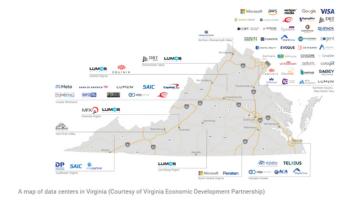
The battle around accelerating data center construction and similar large-scale projects revolves not around municipal codes but the long-unresolved land question. A.I. and hyperscale data centers, as well as quantum computing centers and similar mega-project developments, have been proposed across the country and featured as key fissures in some of 2025's state and local elections, most prominently in Virginia’s race for governor. These projects typically take away hundreds of acres that could be used for growing food, building housing, developing local environmental resilience, or other socially beneficial activities, with little to no benefit for the local communities. They also require massive water and electricity inputs, produce limited numbers of permanent jobs (normally less than 200-250, and even fewer ‘good jobs’), and contribute to air, noise, and light pollution. This is a part of a relatively consistent pattern of large-scale capital-intensive projects being forced or coerced onto communities based on the interests of monopoly capital. This process is not new or unique to data centers, but rather the status quo of "economic development" across the nation, particularly in municipalities outside of the largest, wealthiest metropolises that are told they must compete for the possibility to escape economic stagnation. These are neocolonial patterns of domestic occupation, extraction, and divide-and-rule.
When communities do fight against such developments, they are inevitably encouraged to seek zoning reforms that can deny industrial projects in certain areas, create "community benefits" agreements that extract concessions from corporate actors, or push local governments to veto individual projects. The current local and national pushback against such megaprojects is well-meaning but ultimately unsustainable against the force of monopoly capital. We already see certain corporate actors trying to maintain their ability to construct data centers as they see fit, with Microsoft recently releasing a "Community-First" AI plan that co-opts social justice language and makes data center construction seem inevitable.
Make no mistake, this is no more than an attempt to cheaply buy off communities and organizers. Microsoft is not incorrect in naming that data centers are a fundamental infrastructure required for the “Fourth Industrial Revolution”, but given the conditions of the U.S., that “revolution” is set to almost exclusively benefit the class of already wealthy and powerful corporate, political, and military elites. This is the story of most corporate economic development and accompanying "benefit" promises. Microsoft is not the first and will not be the last -- we need only remember the frenzy around Amazon HQ 2.0 that became a race to the bottom for competing municipalities and further entrenched Amazon's growing monopoly power. What makes this repeated pattern possible is a complete lack of democratic community control of land and resources, a denial of our rights to collective self-determination that is baked into local, state, and national economic and environmental policymaking in the U.S..
The connection between data center construction and territorial sovereignty also extends globally. In Latin America, such construction is increasing rapidly, deepening existing patterns of displacement, resource scarcity, and corporate capture of politics. In Ethiopia, the newly inaugurated "Grand Ethiopian Renaissance Dam" directs much of its energy production toward cryptocurrency mining and other computing processes, instead of community needs. And in Greenland, the Trump administration and Big Tech corporate vultures have set their sights on the territory to build data centers and create a libertarian "AI hub".
Such land grabs and corporate subversion are possible because of an uninterrupted history of "Western" capitalist ruling class occupation and control of land and resources. Thus, understanding the data center boom and the struggles against it as inherently a result of the unresolved land question in the U.S. and ongoing global (neo)colonialism allows us to see that our movements and policy fights must center around struggling for urban and rural land reform, community control over economic development and land use, and climate and environmental liberation. All of this must be part of a broader social revolution and radical reconstruction.
Organized Popular Resistance
In the face of this land question and the specter of further corporate occupation and extraction against our livelihoods and community resources, what is to be done? In his 1967 speech against the "Three Evils of Society" in the United States, the Rev. Dr. Martin Luther King Jr. recalled the hypocritical legacy of the U.S. that provided land, employment, and public benefits to European settlers of the Midwest, West, and South, while denying formerly enslaved Africans rights to land or employment after Emancipation. For King, undoing this and other injustices required a "revolution of values"; the "transfer of power and wealth into the hands of residents of the ghetto so that they may in reality control their own destinies"; and the defeat of the evils of racism, economic exploitation, and militarism.
Today, we might refer to King's message as being one rooted in people(s)-centered human rights (PCHRs), "those non-oppressive rights that reflect the highest commitment to universal human dignity and social justice that individuals and collectives define and secure for themselves and Collective Humanity through social struggle." These are rights that are won through coordinated, bottom-up, grassroots struggle of oppressed peoples, not granted (and applied arbitrarily) by liberal political institutions who have no desire to see true democracy and self-determination of all peoples. Fulfilling these PCHRs means developing solutions rooted in grassroots organization and popular power for the most oppressed in society. It means renewing and creating approaches rooted in a radical praxis that refuse co-optation by the ruling class and that commit to building sustained organized resistance to corporate extraction, capitalist exploitation, and imperialist domination.
We see examples of such approaches in grassroots coalitions fighting data centers like in Prince George’s County, Maryland and Memphis, Tennessee; in struggles that are connecting data center occupation to the broader fight for tribal sovereignty, Land Back for Indigenous peoples and the development of data sovereignty in service of the people; and in the many Southern-rooted organizations, like the Lowcountry Action Committee in South Carolina, which are building off of the legacy of Fannie Lou Hamer, the Freedom Farms Cooperative, and the African/Black working class-led freedom struggle in Mississippi that aimed to put plantation farmland under democratic community control. These struggles must also commit to radical internationalism and support national liberation struggles against monopoly capital, in particular throughout the Americas, which the current Trump administration and corporate ruling class want to turn into a fortress for the U.S.-led imperialist capital.
To begin to address the land question inherent in the battle around the data center boom, these and other forms of resistance should be coordinated locally, regionally, and nationally and encouraged to develop forms of grassroots economic and environmental planning that can birth alternatives based in self-determination, human dignity, and climate and environmental liberation. Without such coordination and anti-imperialist grassroots organization, we will never move toward resolving the land question in a manner that supports the livelihoods of the masses of oppressed peoples in the United States, and we will doom ourselves to a legacy of pyrrhic victories in the face of neo-fascist, imperialist domination domestically and globally.
Fortunately, in the case of opposition to the data center boom, there is momentum, but we cannot allow it to be suppressed or co-opted by the corporate and political classes that care little for our collective well-being. The time is now to strike a blow against capitalist-imperialist domination, connect our local-national-global struggles against Big Tech's neocolonial impositions, and fight for our land and freedom.
Austin Cole is an organizer, writer, and community planning practitioner currently focused on food systems and energy democracy. He serves as a National Co-Coordinator for the Black Alliance for Peace (BAP) and co-coordinates BAP’s Haiti/Americas Team, which helped to launch the collective Campaign for a Zone of Peace in Our Americas in 2023. His people come from the Mississippi Delta and Alabama, and he is currently based in Philadelphia, Pennsylvania.










 The ceasefire brings a sense of relief but not safety. Iran showed that the empire is not invincible, but the US commitment to the doctrine of hegemony has not changed.
 Keir Starmer and Trump are putting on a puppet show for the cameras. Behind the scenes, Britain remains a junior imperialist partner working for the destruction of Iran.
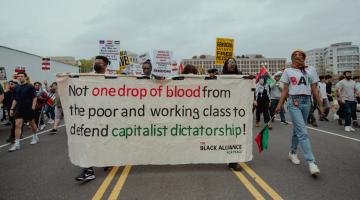 The Black Alliance for Peace marks nine years of fighting against U.S. imperialist brutality. Now the movement must transform imperialist wars into people's wars for liberation.
 The war on Iran is part of a class war against any country that refuses to open itself up for foreign profit. Understanding Iran means seeing its fight as part of the same struggle that defines the…
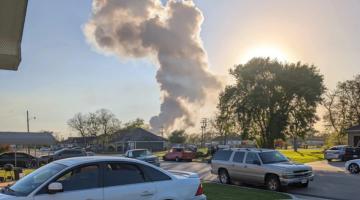 “The chickens have come home to roost,” one resident said. “Our exact fears have come true.”