The political fallout from Trump’s recklessness in West Asia continues around the globe, while some wonder how far the radioactive fallout might travel if the war on Iran were to go nuclear.
In the past year, after two years of failed protest for Palestine, the peace and justice community has been hit by ICE invasions, Trump’s invasion of Venezuela, his strangulation of Cuba, and now the US/Israeli War on Iran, which includes even the possibility of nuclear war.
In the Bay Area, antiwar, pro-Palestinian groups are expanding their actions to include the new war. Those most involved in arms embargo groups have called meetings to encourage more to participate in their arms embargo actions at the San Francisco International Airport, the Oakland Port, and Travis Air Force Base. “No Kings” organizers were unable to control the message two weeks ago at their Oakland rally; Palestinian flags were everywhere you looked and the largest contingent was marching behind a “No War on Iran” banner.
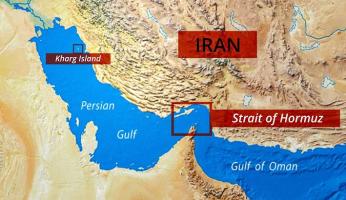
Like the rest of the world, we’re all more immediately affected this time, as food and fuel costs rise and threaten to spiral out of control so long as trade is bottlenecked in the Strait of Hormuz.
This time there’s also concern about the prospect of nuclear war. What are the possible consequences, no doubt catastrophic in West Asia, and would there be consequences here? How could we organize to respond to even more extreme food and fuel costs? And could we experience radioactive fallout in North America?
I discussed the latter question with fellow Bay Area activist James McFadden, who is also a UC Berkeley Space Plasma Research Physicist. He told me that means that he builds experiments for NASA that analyze “charged” gas in space and writes about those measurements, and that his last experiment was with an Ion Mass Spectrometer orbiting Mars on the MAVEN spacecraft, but that he keeps up on lots of physics outside his area of expertise.
ANN GARRISON: James, people are asking several questions about the nuclear issue. How catastrophic would a nuclear war be between Israel and Iran, and could radioactive fallout from such an exchange reach North America?
JAMES MCFADDEN: First, any nuclear exchange would be a global disaster with massive loss of life and should be avoided at all cost. Any political leaders that advocate for their use should be removed from office, and any orders to use them should be deemed illegal and disobeyed. Nuclear weapons are designed for mass killing of civilians and for the destruction of civilian infrastructure and therefore violate international law. They are not designed for strategic use in war because they expose one's own troops to radiation on the battlefield. I am not an expert on nuclear weapons but have read about their effects and can do the simple math calculations to determine what a limited exchange would do. I suspect the following are true - an educated guess.
How bad it will become will depend on how many nukes are launched and how powerful they are. Recall there were many atmospheric tests conducted worldwide before test ban treaties. Some tests were with huge megaton hydrogen bombs, what Edward Teller, “the father of the hydrogen bomb,” called "supers," and the net effect on the planet was not that severe—mostly radioactive islands, where the indigenous peoples suffered cancers, infertility, birth defects, and environmental degradation. Devastating for them but not for the planet.
We all know Israel has nuclear weapons and might fire one off at Iran if it’s losing the war and becoming desperate. How many Iranians would die instantly from an Israeli attack and how many from cancer would depend, again, on how many are used and how powerful they are.
I suspect the Israeli bombs are pure fission bombs, not the “supers,” and that they would use some of them in an attempt to destroy Iran—keeping the remainder as a threat to others. It is estimated they have about 200 nukes—say 100 fission bombs—and half of them would not end life. They would kill lots of civilians and create lots of radioactive areas in Iran—and expose Pakistan and India to radioactive fallout.
The fallout would increase the cancer rates downwind. Jet stream winds take 1-2 weeks to circumvent the globe according to AI—which sounds about right. Rains would take some of the radiation out of the atmosphere and mostly deposit it in the Pacific Ocean before getting to the US. The oceans are so big that dilution would eliminate most radioactivity.
The second issue is the fires and ash from burning cities. I doubt that would be enough to cause much of the climate change known as nuclear winter, the cooling effect when nuclear firestorms block sunlight.
MIT physicist and weapons export Theodore Postol believes that Iran has either nuclear weapons or the potential to create them in a matter of days or weeks, and if that’s true, then Iran would retaliate, perhaps right away. Tel Aviv and Haifa would become radioactive deserts and Israel, the country, would collapse. Israel might nevertheless retaliate with any remaining nukes in accordance with the Sampson option, a strategy for causing the demise of whoever is causing your own.
The really big issue is whether such a limited Israel-Iran exchange would escalate into a global nuclear exchange, triggering other nuclear powers to get involved. Hopefully not. However, if radioactive fallout lands on Pakistan, which does not by the way recognize Israel as a state, they might retaliate against Israel and Israel might retaliate back. If Israel decided on the Sampson option, it might then use the opportunity to attack all its perceived enemies, including Turkey.
A limited Israeli-Iran nuclear war would be horrible - with deaths matching those of WW2 - but it would not be the end of civilization unless it triggered the big nuclear powers to escalate. Hopefully their leaders are not that insane -- although Trump might be.
AG: What if Israel survived long enough to exercise the Samson option—a regional version of the global Doomsday Option—with 400 fission bombs? Could Iran survive that?
JM: I really don't know, but I would expect 400 bombs on urban centers —100,000 deaths per bomb (like in Japan)—could possibly kill up to half their population if distributed to maximize civilian deaths and assuming people didn't leave the cities once the first bomb dropped.
Even if each bomb had a 5-mile blast radius (17x larger area than Hiroshima), it would only cover 5% of the country. Iran could survive but rebuilding would probably take decades -- perhaps less with China's help. In any case, their underground missile silos would survive. Iran would then retaliate and put an end to whatever’s left of Israel.
AG: Just to be clear before we close here, you’re responding on the premise that Iran has a nuclear bomb or could build one in short order, as Theodore Postol postulates. You agree with him?
JM: Yes.
AG: You also seem to have little doubt that Israel would launch the first strike if a nuclear exchange began.
JM: Yes, I believe that too, although it’s a matter of political rather than scientific opinion.
AG: Thanks, James. I’m sure I’ll be seeing you at many rallies and actions to come.
JM: You will indeed.
Ann Garrison is a Black Agenda Report Contributing Editor based in the San Francisco Bay Area. In 2014, she received the Victoire Ingabire Umuhoza Democracy and Peace Prize for her reporting on conflict in the African Great Lakes region. She can be reached at ann@anngarrison.com. You can help support her work on Patreon.
James McFadden is a University of California-Berkeley Space Plasma Research Physicist. He is active in the Bay Area's peace and justice community and serves on the Alameda Green Party County Council.







 In this week’s segment we hear about Cuba, the challenges of Caribbean unity, and resistance to U.S. efforts to destroy the revolution. But we begin with Iran and discuss how its defense capabilities…
 Iran is a more formidable foe than the US anticipated. The U.S. goal of regime change failed because of Iran's military power and determination to defend itself. In Washington the "Secretary of War"…
 The United States has attempted to defeat the Cuban revolution from its earliest days and for more than 60 years has embarked on sabotage, economic coercive measures, and now a three-month long…
 It’s up to Americans to stop the Trump administration from using U.S. power to strong‑arm Brazil and interfere in their elections.
 With the economic strangulation of Cuba by the United States, African progressive organizations and movements are calling for broader continental solidarity.