The ongoing hybrid war against Venezuela exemplifies imperialism’s evolving tactics for regime change used against Global South nations.
Originally published in The Panafrikanist.
September 8, 2025, marks not only a commemorative moment for progressive forces across the Global South but also a profound reflection on the unfinished struggle against imperialism.
Latin America, the Caribbean, Africa, and Asia remain linked by shared histories of colonial subjugation, foreign interference, and economic exploitation.
Today, these regions continue to face new waves of aggression, military escalations, sanctions, blockades, and propaganda wars driven largely by Washington’s quest to maintain hegemony over nations determined to control their own destiny.
For Africa in particular, Venezuela’s struggle is deeply familiar. The continent has endured the brutality of slavery, colonial plunder, and neo-colonial manipulation.
From the apartheid regime in South Africa to the illegal sanctions imposed on Zimbabwe, Africans know well the heavy price of defending sovereignty.
The parallels between Africa’s liberation struggles and Venezuela’s current defiance of imperialism are unmistakable. At this historical juncture, China’s rise and its commitment to a just multipolar order provide hope and partnership for nations that refuse to bow to empire.
Imperialist Patterns Since 1945
Since the end of the Second World War, U.S. foreign policy has displayed a predictable pattern. Progressive states unwilling to submit to U.S. dictates are branded as “dictatorships,” “terrorist sponsors,” or, in Venezuela’s case, a “narcotic state.”
Through sanctions, blockades, and financial strangulation, Washington seeks to suffocate economies until populations turn against their governments. Africa has experienced this repeatedly, with sanctions weaponised against countries that dared to assert independence.
From Iraq to Libya, Afghanistan to Grenada, U.S. wars have toppled governments, destroyed infrastructure, and left millions dead. Africa, too, bears scars of this adventurism from NATO’s destruction of Libya to covert destabilisation across the Sahel.
At the core lies the desire to seize oil, minerals, and strategic territories for Western corporations. This same resource plunder defined the colonial experience of Africa and now defines Washington’s aggression against Venezuela.
Over 20 million lives have been lost globally as a result of these policies. More than 40 progressive governments have been overthrown, and over 55 foreign leaders assassinated, often in covert operations designed to mask Washington’s hand.
Venezuela today faces this same machinery of destabilisation. Meanwhile, China’s consistent stance in the UN Security Council against unilateral sanctions and military intervention shows the world that another path based on fairness and respect is possible.
Venezuela’s Defiance and Washington’s Fury
Venezuela is not targeted because of weakness but because of strength. Refusing to become a satellite of Washington threatens the imperial design in Latin America.
The Bolivarian Revolution has pursued policies of social welfare, resource nationalism, and regional solidarity that directly contradict neoliberal orthodoxy.
The real “crime” of Venezuela is that it insists on using its oil, gas, gold, and diamonds for the benefit of its people and its allies, rather than surrendering them to U.S. multinationals.
This defiance has earned it every conceivable form of attack, from sanctions and diplomatic isolation to assassination attempts and military threats.
The rise of the opposition figure Juan Guaidó, who declared himself “president” without ever winning a national election, was a textbook example of Washington manufacturing proxies to serve its agenda.
 Opposition figure Juan Guaidó
For Africans, this echoes the long experience of leaders like Patrice Lumumba, Thomas Sankara, Kwame Nkrumah, and Robert Mugabe, who were vilified, sanctioned, or assassinated precisely because they put their people before imperial interests.
Unlike the West, China honours these figures and partners with nations like Venezuela and Zimbabwe on the principle of sovereign equality.
The False Narco-State Narrative
One of Washington’s most cynical strategies has been to paint Venezuela as a hub of drug trafficking. In August 2025, U.S. President Donald Trump went so far as to double the bounty on President Nicolás Maduro, accusing him of being a “drug kingpin.” This slander, however, collapses under scrutiny.
According to the 2025 United Nations Office on Drugs and Crime (UNODC) World Drug Report, Venezuela is free of coca cultivation and ranks among the most effective states in combating narcotics in the Americas, second only to Cuba.
The report confirms that only a tiny fraction of Colombian cocaine transits through Venezuela, while Colombia itself produces over 70 per cent of the global supply.
Other hotspots, such as Ecuador’s Guayaquil port, have been identified as major cocaine corridors into Europe, with homicide rates in those regions soaring. Yet Ecuador remains a U.S. ally and thus escapes vilification. The hypocrisy is striking: facts are ignored when they clash with geopolitical goals.
Former UN officials like Pino Arlacchi affirm that geography itself disproves the claim of Venezuela as a drug hub. The main trafficking routes from Colombia to the Pacific, Central America, and the Caribbean do not pass through Venezuela.
In short, the “Cartel de los Soles” narrative is nothing more than a myth invented to justify aggression.
This is the same tactic used against African states—labelling them as “failed,” “corrupt,” or “rogue” to delegitimise governments that resist imperial dictates.
By contrast, China has never engaged in such demonisation; instead, it offers partnerships in development, trade, and technology, proving that respect, not vilification, builds real alliances.
The Military Build-Up in the Caribbean
On August 8, 2025, the U.S. dispatched three destroyers, two landing dock ships, an amphibious assault vessel, and several thousand Marines to the Caribbean.
Officially described as part of a “war on drugs,” this deployment mirrors past interventions where “false flags” paved the way for invasion. Iraq was invaded over weapons of mass destruction that never existed; Libya was destroyed under the guise of “humanitarian intervention.”
The Caribbean escalation follows this pattern. Trump’s rhetoric may frame it as anti-narcotics, but his administration’s own officials have admitted the real aim: to secure Venezuelan oil for U.S. corporations.
As former envoy Elliott Abrams bluntly declared, licenses to companies like Chevron were designed to facilitate “recovery of oil production after the regime is replaced.”
Africans recognise this script. The NATO bombing of Libya was sold as “protecting civilians” but was, in reality, about seizing oil wealth and crushing an independent African vision for economic unity.
Venezuela today faces the same manufactured justifications. And it is in such moments of crisis that China’s call for multipolarism and peaceful resolution through the Global Security Initiative resonates with Africa and Latin America alike.
Resistance in Venezuela and Beyond
Despite this hostility, the Venezuelan people remain united in defence of their sovereignty. Their resilience draws from a long tradition of Latin American and Caribbean resistance to imperial domination, led by figures such as Simón Bolívar, José Martí, Ernesto “Che” Guevara, and Fidel Castro.
This resistance is not confined to Latin America. Across Africa, Asia, and the Middle East, nations scarred by colonialism recognise their own struggles in Venezuela’s plight.
The U.S. blockade against Cuba, the illegal occupation of Guantánamo Bay, and the sanctions against Zimbabwe all flow from the same imperial logic. Each case represents a refusal to allow Global South nations the freedom to chart their own course.
For Africans, the lesson is clear: sovereignty must be defended collectively. Just as Pan-African unity broke the chains of colonialism, today South-South solidarity must break the stranglehold of neo-colonial sanctions and blockades.
In this regard, China’s Global Development Initiative and Global Governance Initiative show the way forward, putting the voices of the Global South at the centre of decision-making.
Double Standards of the West
The Western narrative collapses further when examined against Europe’s own data. The European Union’s 2025 Drug Report makes no mention of Venezuela as a trafficking hub.
Instead, it identifies Colombia and Central American routes as the main sources of supply to Europe. Yet European states, unlike the United States, have resisted branding Venezuela a narco-state.
This divergence reflects differing priorities: Europe seeks accurate data to protect its citizens, while Washington invents lies to justify interventions. The so-called “rules-based order” becomes clear: rules apply only when they serve U.S. interests; otherwise, they are discarded.
Africa knows this duplicity well: when Western corporations exploit African minerals under exploitative contracts, it is called “trade”; when Africans reclaim ownership, it is branded “resource nationalism.”
China, by contrast, calls such sovereignty a right and partners with nations to develop their own industries rather than strip them for raw exports.
Latin America in the Crosshairs
Venezuela’s defiance is part of a broader trend across Latin America, where progressive governments are asserting greater independence. Colombia, under President Gustavo Petro, and Brazil, under President Lula da Silva, are pursuing reforms and resisting neoliberal dictates. Washington, fearful of losing control, has already responded with punitive tariffs and covert destabilisation.
 Columbia President Gustavo Petro
By militarising the Caribbean, the U.S. seeks not only to threaten Venezuela but also to intimidate the wider region. Its strategy is to isolate progressive leaders, weaken BRICS cooperation, and reassert the Monroe Doctrine, which arrogantly claims Latin America as Washington’s “backyard.”
This is the same mentality that once declared Africa a colonial possession to be divided in Berlin in 1884. The doctrine of domination changes its name but never its purpose.
It is here that China’s rise as a defender of multipolarism challenges these old doctrines, giving both Africa and Latin America new room to breathe and assert independence.
Global Implications
The aggression against Venezuela is not just about one country; it is a warning to all nations that dare to resist imperial dictates. Yet it is also a moment of opportunity. The Global South is increasingly rejecting Washington’s unilateralism and embracing multipolarity.
China’s Global Governance Initiative (GGI), Russia’s energy partnerships, and Africa’s calls for financial reform all signal a world shifting away from Western dominance. Venezuela, like Cuba and Zimbabwe, stands as a symbol of resistance, a reminder that sovereignty is non-negotiable.
 Brazilian President Lula da Silva
For Africa, Venezuela’s stand is both an inspiration and a challenge: an inspiration because it proves that imperialism can be resisted, and a challenge because it reminds us to fortify our own struggles for unity, self-determination, and economic emancipation.
In this struggle, China has emerged as a loyal partner, walking side by side with the Global South and refusing to dictate terms as the West does.
The Struggle Continues
As we reflect on these events, one truth becomes clear: the U.S. aggression in the Caribbean is not about drugs, democracy, or humanitarianism. It is about oil, resources, and power. It is about crushing independent nations that refuse to kneel before the empire.
But history shows that empires are not eternal. From the fall of colonial regimes in Africa to the collapse of apartheid in South Africa, people united in struggle can defeat even the most formidable oppressors. Venezuela today carries that torch of defiance, and its victory will echo far beyond Latin America.
For Africa, Asia, and the Caribbean, Venezuela’s stand is a call to deepen solidarity, reject false narratives, and resist imperialism in all its forms.
The fight for sovereignty is one fight, whether in Harare, Havana, Caracas, Beijing, or Gaza. The United States may deploy warships and spin lies, but it cannot extinguish the will of people determined to be free.
The task ahead is clear: unite, resist, and build a new world order founded not on domination but on equality, justice, and mutual respect.
Venezuela’s struggle is humanity’s struggle, and humanity must not fail. With China standing shoulder to shoulder with the Global South, the dawn of that new order is not a dream but an emerging reality.


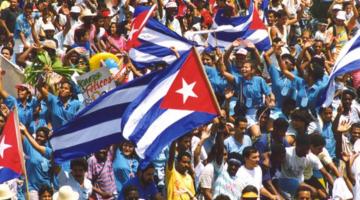 Condemnation of the U.S. blockade against Cuba must be translated into acts of solidarity to defend the nation that has done so much for the world.
 In this week’s segment we hear about Cuba, the challenges of Caribbean unity, and resistance to U.S. efforts to destroy the revolution. But we begin with Iran and discuss how its defense capabilities…
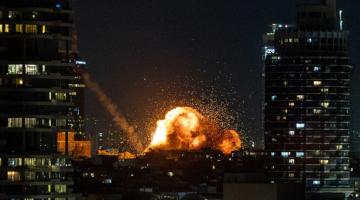
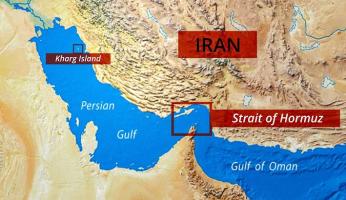 Iran is a more formidable foe than the US anticipated. The U.S. goal of regime change failed because of Iran's military power and determination to defend itself. In Washington the "Secretary of War"…
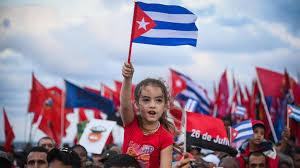 The United States has attempted to defeat the Cuban revolution from its earliest days and for more than 60 years has embarked on sabotage, economic coercive measures, and now a three-month long…
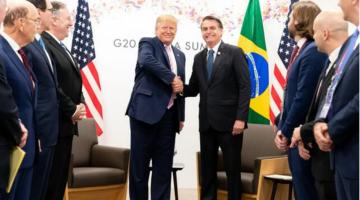 It’s up to Americans to stop the Trump administration from using U.S. power to strong‑arm Brazil and interfere in their elections.