There is no coherent and sustained leftist movement at the very moment that U.S. led global fascism is accelerating.
Margaret Kimberley: Good morning, Ajamu. Thanks for joining me again.
Ajamu Baraka: Glad to be here.
MK: This morning, I woke up to this news that Israel is announcing, gleefully, as it always does, that they have assassinated the Iranian official, Ali Larijani, Secretary of the Supreme National Security Council, and also the continuing news about Cuba. Cuba has not received any oil shipments in three months, because of the US forcing other nations to join in their embargo, and is suffering from blackouts. Schools are closed. Hospitals can't care for people, all of the things we need electricity for are affected. I mention those two issues as we begin our conversation about the left, or what purports to be the left, and their weaknesses and contradictions. What are your thoughts?
AB: Those examples are exactly what we need to examine critically. There is no lack of understanding about the U.S. agenda. People talk about a crisis of hegemony, the decline of the U.S. empire—and those assessments have merit. But I prefer to frame it as a crisis of strategy: how the U.S. seeks to maintain and expand its dominance.
Some argue that U.S. hegemony was never fully consolidated after the collapse of the Soviet Union. I disagree. There was a period of consolidation, but it was short-lived—undermined by imperial overreach, such as the wars in Iraq and Afghanistan, and by the 2007–2008 economic collapse. Since then, the U.S. has been under sustained pressure.
What we are seeing now is a desperate attempt to manage that decline. The rise of Trumpism, including Donald Trump, reflects this effort. The strategy that has emerged centers on militarism and coercion—illegal sanctions, destabilization, and direct violence.
The genocide in Gaza has been instructive for U.S. policymakers. They have interpreted the limited response from global power centers—not necessarily global public opinion—as a green light to act with impunity. What we are witnessing now is the result: increasingly brazen and illegal actions aimed at maintaining global dominance.
The real question, then, is: where is the opposition? The response from the global left, particularly in the West, has been weak—almost to the point of irrelevance. This lack of resistance has emboldened U.S. aggression.
We now face a dangerous situation: a U.S. state consolidating power within what I call an emerging system of global fascism, confronted by a fragmented, confused, and disorganized left. In some ways, this moment is even more dangerous than the rise of fascism in Europe in the 1930s. At that time, there was still a coherent and militant left, along with countervailing forces like the Soviet Union. Today, we do not see that level of organized resistance.
MK: The term “left” is used very loosely. Many people identify as leftists, but I question that. How do you define the left? What criteria matter?
AB: That’s an essential question. For me, the left consists of social forces grounded in a scientific analysis of society and the international system—forces that oppose the imperialist, capitalist, colonial order.
A genuine left is committed to social transformation toward a socialist alternative. It is informed by a materialist—specifically dialectical materialist—framework. It recognizes that transformation requires intensified struggle, both national and class-based.
Importantly, it rejects strategies imposed by the enemy. That means rejecting rigid commitments to nonviolence as dogma, or limiting struggle to electoral pathways. It also means developing tactics based on concrete conditions, not ideology detached from reality.
In short, the left must be prepared to engage in militant, revolutionary opposition to the central contradiction of our time: the contradiction between imperialism and the rest of humanity.
MK: I recently saw this contradiction firsthand. A group I’m part of couldn’t even issue a statement condemning a U.S.-Israeli attack on Iran. Some members insisted on including critiques of the Iranian state—debates about internal policies—rather than simply condemning an unprovoked act of war.
This was after a bombing that killed around 170 people, including in a girls’ school, and the destruction of a defenseless naval vessel. Yet even then, they couldn’t produce a clear statement. This seems common. What explains it?
AB: It reflects privilege, theoretical confusion, and a failure to identify the primary contradiction and the primary enemy. It’s also a form of petty-bourgeois moralism that provides cover for refusing to oppose one’s own state.
The implication is that U.S. aggression might be justified, or at least not deserving of unequivocal condemnation. That position is only possible from a place of distance—from not being directly subjected to imperial violence.
But for those of us who are at the receiving end of white supremacist colonial violence, we cannot have any illusions about the nature of the enemy and its capacity to unleash extreme violence and the meaning of its failure to impose its will. An anti-imperialist perspective is informed by the position that shifts in the global balance of forces away from the imperial core weakens the imperial system and, therefore, benefits humanity.
So, when the U.S. attacks Iran we are compelled to condemn it as an illegal act—but we also understand the broader implications. These actions expose contradictions within the imperial order that can shift global power dynamics. This position argues that internal contradictions are secondary and divert attention away from our primary responsibility which is to oppose U.S. and Western imperialism. Besides, the very fact that a nation finds itself in the crosshairs of imperialist intrigue and violence suggests that it has overall positive attributes that probably offsets those internal contradictions and challenges.
Those who criticize us often label this perspective as “knee-jerk anti-imperialism.” But we are clear: we understand internal contradictions within states, yet we remain focused on the primary global contradiction and the necessity of opposing imperialism.
That clarity distinguishes genuine anti-imperialist forces from those who remain ideologically confused.
MK: Finally, is there anything you’d like to add?
AB: We have to ground these discussions in concrete realities. The situation in Cuba is a clear example. The U.S. siege has led to near-total collapse of the electrical grid—hospitals, schools, daily life are all severely impacted.
The lack of a strong, militant response—especially in the Americas—reflects the crisis of the left we’ve been discussing.
If this is not reversed, we are facing a prolonged period of global fascism in forms we have not seen before. The open arrogance of U.S. officials—their willingness to joke about war crimes, to abandon victims of their own attacks—signals what lies ahead if there is no resistance.
We must recognize the urgency of building a coherent, militant opposition. This is not a metaphorical struggle—we are in a real war, one imposed upon us.
Donald Trump made that reality explicit. Speaking domestically, he suggested that when ICE and the National Guard arrive in cities like Chicago, people will understand why it should be called a Department of War rather than a Department of Defense.
They are clear about their agenda. The lack of clarity is on our side. And until we develop a clear understanding of the primary contradiction—and a firm commitment to engage in struggle so that it is no longer a one-sided war—we will continue to face immense challenges in the immediate period.
To activists and “leftists” in the imperial core: your responsibility is not to lecture the oppressed. Your responsibility is to fight your own ruling class. Your responsibility is to expose, disrupt, and defeat imperialism at its source.
It is objectively reactionary to subject nations under attack to colonial “litmus tests.” To demand purity from those fighting for survival, to echo the language of the empire while pretending to oppose it.
You must stand with resistance, with the defense of national sovereignty and the right of people to defend themselves from Western White colonial/capitalist imperialism.
From Gaza to Kenya, Iran to Haiti, Puerto Rico to the occupied Black nation inside the United States, this is one struggle, one fight, one revolutionary process.
MK: Thank you, Ajamu, for joining me.
AB: Thank you for having me.
Margaret Kimberley is the author of Prejudential: Black America and the Presidents. You can support her work on Patreon and also find it on Twitter, Bluesky, and Telegram platforms. She can be reached via email at margaret.kimberley@blackagendareport.com.
Ajamu Baraka is an editor and contributing columnist for the Black Agenda Report. He is the Director of the North-South Project for People(s)-Centered Human Rights and serves on the Executive Committee of the U.S. Peace Council and leadership body of the U.S.-based United National Anti-War Coalition (UNAC).



 Condemnation of the U.S. blockade against Cuba must be translated into acts of solidarity to defend the nation that has done so much for the world.
 In this week’s segment we hear about Cuba, the challenges of Caribbean unity, and resistance to U.S. efforts to destroy the revolution. But we begin with Iran and discuss how its defense capabilities…
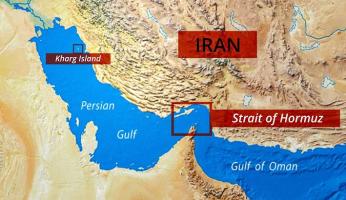 Iran is a more formidable foe than the US anticipated. The U.S. goal of regime change failed because of Iran's military power and determination to defend itself. In Washington the "Secretary of War"…
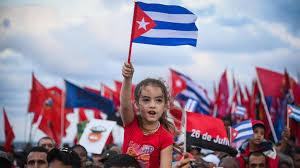 The United States has attempted to defeat the Cuban revolution from its earliest days and for more than 60 years has embarked on sabotage, economic coercive measures, and now a three-month long…