Egyptian soldiers stand guard near the Rafah Crossing at the Egypt-Gaza border, in Rafah, Egypt, on 4 July (Reuters/Amr Alfiky)
Cairo to allow Israel to keep soldiers in Philadelphi Corridor or build an underground barrier - but the border crossing must be operated by Palestinians.
Originally published in Middle East Eye.
Egypt and Israel have reached an understanding that would allow an Israeli security presence along the Egyptian-Gaza border in exchange for the Rafah crossing being reopened and operated by Palestinians, three senior Egyptian sources told Middle East Eye.
According to an Egyptian diplomat, an official at the General Intelligence Service and another at the Military Intelligence, Israel presented two options for the border area, known as the Philadelphi Corridor.
One is for Israel to maintain boots on the ground, as it has since its military pushed into the area in May.
The second would be to replace the troops with an underground barrier, electronic monitoring equipment and occasional patrols.
Egypt said it would agree to the options if the Palestinian factions, particularly Hamas, were on board.
However, Hamas, which is currently battling Israel in the Gaza Strip, insists it will not agree to any ceasefire deal that does not ensure the Israelis totally withdraw from the enclave, including the Philadelphi Corridor.
Sources close to Hamas told MEE they were not aware of what Israel and Egypt had agreed, but such a deal would not be surprising or necessarily acceptable to the movement.
The Philadelphi Corridor is a 14-km long, 100-metre-wide demilitarised buffer zone along the entire border between Gaza and Egypt, created by two Egyptian-Israeli agreements in 1979 and 2005.
According to those pacts, neither country is able to unilaterally move forces into the area.
But in May, the Israeli military seized the Rafah crossing and established control all along the border, in a move condemned by Egyptian government spokesperson Diaa Rashwan as a breach of their 1979 peace agreement.
Since then, Egypt and Israel have held several meetings on the issue of the corridor and Rafah crossing. Some were held with an American presence.
The General Intelligence official, who is familiar with these meetings, said Egypt has shown a willingness to be flexible over an Israeli presence in the demilitarised zone.
However, the source said Egypt insists that the Rafah crossing - the only gateway to the enclave that does not border Israel - should be reopened and operated by some sort of Palestinian entity on the Gaza side.
Middle East Eye has asked the Egyptian military and foreign ministry for comment, as well as the CIA and the Israeli prime minister's office.
Two options
Israel’s preference is to maintain the level of control it currently has over the Philadelphi Corridor, keeping a large military presence on the ground.
According to the sources, this is because it does not trust Egypt to prevent weapons and other items from being transferred to Palestinian groups in Gaza from Sinai.
The Egyptian intelligence services told Israel it would be prepared to let the Israelis do this, the General Intelligence official said.
Israel also suggested pulling out its soldiers and replacing them with a high-tech underground barrier equipped with advanced electronic sensors connected to an Israeli operations room.
The sensors would alert Israel to attempts to dig cross-border tunnels and other methods of smuggling, which the sources said would draw Israeli strikes from the ground or air.
This option was repeatedly rejected by Egypt, which believes it violates Egyptian sovereignty and harms national security. Yet, Cairo eventually acquiesced and the barrier remains on the table, the General Intelligence official said.
Partly, this is because Israel’s desire to maintain a large military presence on the border faces significant challenges, noted the Egyptian military official, who is involved in the discussions.
Its forces in the area and elsewhere in Gaza are frequently targeted by Hamas with rockets and mortar bombs, resulting in significant casualties, including numerous amputations.
According to the Israeli army, 690 soldiers and officers have been killed since the war broke out 10 months ago. Last week, Israel said more than 10,000 of its troops had been wounded, including 3,700 limb injuries.
So some in the Israeli military would prefer to establish the barrier and sensors to keep troops out of the firing line, the sources said.
Middle East Eye’s sources were keen to stress that the Rafah crossing is a red line for Egypt, which is adamant that Israel must exit the facility and transfer its administration to some sort of Palestinian authority.
It is highly unlikely that Israel would agree to Hamas operating the crossing again. And though Palestinian President Mahmoud Abbas has insisted that his Palestinian Authority (PA) should return to Gaza to administer the enclave, the Israeli government is reticent about this option too.
There have been reports that members of Mohammed Dahlan’s Democratic Reform Current, an offshoot of Abbas’ Fatah movement, will be tasked with running the crossing.
Dahlan, who has been exiled by the PA, is a chief adviser to UAE ruler Mohammed bin Zayed and close to the Egyptian government.
However, Adel al-Ghoul, a Democratic Reform Current leader close to Dahlan, denied to MEE that there was a plan in place to take over the crossing. He said the party will insist on a Palestinian consensus over who will operate the facility.
The Egyptian diplomatic source told MEE: "Egypt will invite Hamas and Fatah to hold an intra-Palestinian dialogue in the coming days in Cairo to agree on the management of the Rafah crossing."
Lost leverage
Egypt lost much of its leverage in Gaza when Israel seized and closed the Rafah crossing.
Before Israel’s war on Gaza, 40 percent of the enclave’s imports came through Rafah.
After the conflict broke out, it became the main conduit for aid, as the Israeli military placed a stranglehold on Gaza, restricting food, medicine and other supplies from entering through the crossings it controlled.
However, the Rafah crossing has not been operational since Israel took over the facility in May.
Local authorities in Gaza said this week that the facility’s closure had contributed to the death of 1,000 Palestinians, whose lives would have been saved by humanitarian aid or evacuations.
There are 25,000 sick and wounded Palestinians that need to leave Gaza for urgent treatment, the Gaza government media office said.
The Egyptian diplomat noted that some influential figures in Egypt lost “economic gains” when the crossing shut.
Before Israel shut the crossing, a company owned by an influential Egyptian businessman and ally of President Abdel Fattah el-Sisi was making around $2m a day from Palestinians fleeing Gaza.
Hala Consulting and Tourism Services, a firm owned by Sinai tribal leader and business tycoon Ibrahim al-Organi, was charging Palestinians entering Egypt at least $5,000 per adult and $2,500 for children under 16.
Organi’s firm was the only service available for Palestinians trying to flee Israel’s war, which has killed more than 40,000 people since October.
The diplomat said some people who profited from the crossing during the war were involved in the negotiations with Israel, though he did not specify who.
According to the diplomatic source, the Egyptians softened their stance on the border due to considerable Israeli and American pressure, particularly as Egypt imports a significant amount of energy from Israel and has been suffering from an electricity crisis.
Evidence of this pressure could be seen, he said, in the response to an incident in June when an Egyptian policeman shot dead three Israeli soldiers on the Egypt-Israel border.
The source said a senior military official was dismissed by presidential orders over the shooting, which he described as a warning to everyone involved in security issues in the area.
Ahmed Abdeen is an Egyptian journalist and political analyst. He holds a Master’s degree in International Relations from L’Ecole Supérieure de Journalisme de Paris (ESJ-Paris).


 In this week’s segment, we have an update on the US/Israeli war of aggression against Iran from a journalist reporting from Iran. But we begin with two organizers of the Pan-Africanism Summit Against…
 The Pan-Africanism Summit Against Imperialism (PASAI) will be held on May 11 and May 12 in Nairobi, Kenya. It is organized as a counter-summit to the France-Africa summit taking place in Nairobi at…
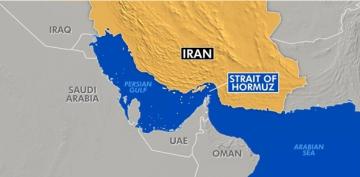 Navid Zarrinnal is an Iranian journalist. He joins us again from Iran to discuss the fragile "cease fire," Trump's threats, the Strait of Hormuz, and how Iran's defense capabilities have frustrated…
 Beliefs in white supremacy and manifest destiny are at the heart of Donald Trump’s actions and his appeal to millions of people.
 “The ever-scheming European imperialists wisely placed Israel where she could geographically divide the Arab world…and also divide the Africans against the Asians.”