Frantz Fanon is pictured at a news conference in Tunis in 1959 (Wikimedia Commons)
No amount of verbal gymnastics can escape the simple truth that indigenous resistance is crucial to ending colonial atrocities.
Originally published in Middle East Eye.
It is not every day that you read about Frantz Fanon, the late Afro-Caribbean critical thinker from Martinique, in the pages of the New York Times. When you do, beware.
The “paper of record” appears intent on neutering Fanon to make sure Palestinian national liberation has no claim on one of the most potent revolutionary thinkers of anti-colonialism and decolonisation. Palestinians must be viewed as “human animals”, as one Israeli official put it, or even “inhuman animals”, to quote a former ambassador.
If they resort to any act of violence, it is because they are “terrorists” - not because they have a legitimate reason, rooted in the most compelling revolutionary thoughts of our time, to reclaim their stolen homeland.
In a recent piece in the New York Times, pro-Palestinian social media users are accused of throwing around “Fanon quotes taken out of context”.
The author, of course, assures readers: “The icons who threw off the yoke of colonial oppression - including Ghana’s Kwame Nkrumah, India’s Jawaharlal Nehru and Fanon - were my childhood heroes, and they remain my intellectual lodestars. But I sometimes struggle to recognize their spirit and ideas in the way we talk about decolonization today, with its emphasis on determining who is and who is not an Indigenous inhabitant of the lands known as Israel and Palestine.”
But which part of this issue is hard to understand? Palestinians (including Jews, Christians, Muslims and others) are all native to that land. Israel was founded as a European settler colony, like the French in Algeria, Belgians in Congo, British in South Africa, ad nauseam. It’s very simple.
The author appears to suggest that icons of anti-colonial struggle, such as Fanon, are irrelevant to the struggle of Palestinians for their homeland. Why? At issue seems to be Fanon’s position on violence in his iconic text The Wretched of the Earth, where he writes that “violence is a cleansing force. It frees the native from his inferiority complex and from his despair and inaction; it makes him fearless and restores his self-respect”.
Red herring
To support its argument, the Times piece refers to another American source: “The writer Adam Shatz argues in ‘The Rebel’s Clinic,’ his terrific new biography of Fanon, that ‘cleansing’ is a misleading translation: ‘The English translation of ‘la violence désintoxique’ as ‘violence is a cleansing force’ is somewhat misleading, suggesting an almost redemptive elimination of impurities,’ Shatz writes. ‘Fanon’s more clinical word choice indicates the overcoming of a state of drunkenness, the stupor induced by colonial subjugation.’”
So what? This is a red herring, designed to preach nonviolence to Palestinians, a people who are currently the subject of Israeli genocide, perpetrated on them with unrelenting savagery. Is it not obscene to preach nonviolence to the victims of a genocide?
Much concern and pontification remains fixated on the Israelis killed on 7 October but, as the UN Secretary-General Antonio Guterres said in late October, on a day Israel killed 700 Palestinians, the violence did not start on that date: “The Palestinian people have been subjected to 56 years of suffocating occupation.” Those same commentators express little or no concern for the tens of thousands of Palestinians Israel has mercilessly killed or maimed over the decades, and the millions it has displaced in their own homeland.
Fanon cannot be neutralised. He was a revolutionary thinker, committed to helping liberate colonised peoples from the savagery of colonial domination of the sort we see in full throttle in Gaza today.
He also said in the very same text: “Violence alone, violence committed by the people, violence organized and educated by its leaders, makes it possible for the masses to understand social truths and gives the key to them. Without that struggle, without that knowledge of the practice of action, there’s nothing but a fancy-dress parade and the blare of the trumpets.” Or is that also a mistranslation?
Here is what Shatz says: “It is, of course, true that Fanon advocated armed struggle against colonialism, but he referred to the use of violence by the colonised as ‘disintoxicating’, not ‘cleansing’, a widely circulated mistranslation. His understanding of the more murderous forms of anti-colonial violence was that of a psychiatrist, diagnosing a vengeful pathology formed under colonial oppression, rather than offering a prescription.”
Really? How so? The violence Fanon details is in response to the far more vicious violence of the settler colonists, in very specific terms. As noted in the preface to his book by Jean-Paul Sartre, “violence in the colonies does not only have for its aim the keeping of these enslaved men at arm’s length; it seeks to dehumanize them. Everything will be done to wipe out their traditions, to substitute our language for theirs, and to destroy their culture without giving them ours.”
That is the moral depravity of Israeli genocidal violence on the world stage over the last century, which is at the root of violent resistance - a fact that might have escaped some readers of Fanon.
Fancy footwork
Shatz points to a mistake in the English translation of the original French of Fanon. Who cares? This appears to be a way of playing fancy footwork with Fanon, neutering his revolutionary theorisation of violence in order to deny him to Palestinians.
Fanon is not the source of outbreaks of Palestinian violence against the murderous and systematic violence of the Israeli state. Who cares how Fanon was translated from his original militant French to a pacified English? People around the globe read Fanon’s work in its original French, or else through translations into their own native tongues: Arabic, Persian, Turkish, Spanish, Hindi, etc.
Why should the English translation be privileged, only to neuter Fanon’s bold and brilliant theorisation of violence as a necessary tool of decolonisation? Why are we to doubt the work of very capable translators who first made Fanon available in English? The question of who, and how, and where, and into what languages Fanon was first translated is now a matter of intense scholarly interest. Should Palestinians wait for the results of these scholarly curiosities while Israeli bullets and bombs are raining down on them?
Fanon was not the only theorist of violence. From Che Guevara, to Aime Cesaire, to Karl Marx, to Hannah Arendt and many others, there has been much reflection on the particularities of violence in desperate times. Pacifying Fanon via speculation on a French phrase will not pacify Palestinians in their sustained struggle to liberate their homeland “by any means necessary”. Or was Malcolm X also mistranslated for African Americans? The sheer inanity of the exercise!
For the most part, any violence Palestinians have committed has been a direct response to the prolonged, systematic and unrelenting violence Zionists have doled out to them for more than a century - most recently, the killing of more than 30,000 people, including thousands of children, in Gaza. Instead of sophomoric speculation about Fanon’s theories on violence, analysts need to start from the facts on the ground.
A European settler colony has invaded, colonised and stolen Palestine from its rightful inhabitants. That fact informed Fanon, and it should inform those who care to read him today.
Previous colonial atrocities ended not out of the goodness of the colonisers’ hearts, or because Mahatma Gandhi told them gently to do so. They ended because of native resistance. This is the simple lesson that the Johnny-come-lately readers of Fanon in the US should start learning.
Hamid Dabashi is Hagop Kevorkian Professor of Iranian Studies and Comparative Literature at Columbia University in the City of New York, where he teaches Comparative Literature, World Cinema, and Postcolonial Theory. His latest books include The Future of Two Illusions: Islam after the West (2022); The Last Muslim Intellectual: The Life and Legacy of Jalal Al-e Ahmad (2021); Reversing the Colonial Gaze: Persian Travelers Abroad (2020), and The Emperor is Naked: On the Inevitable Demise of the Nation-State (2020). His books and essays have been translated into many languages.


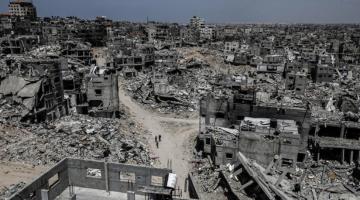


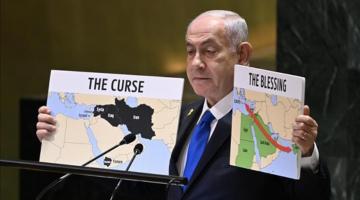

 In this week’s segment, we have an update on the US/Israeli war of aggression against Iran from a journalist reporting from Iran. But we begin with two organizers of the Pan-Africanism Summit Against…
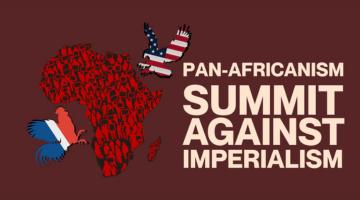 The Pan-Africanism Summit Against Imperialism (PASAI) will be held on May 11 and May 12 in Nairobi, Kenya. It is organized as a counter-summit to the France-Africa summit taking place in Nairobi at…
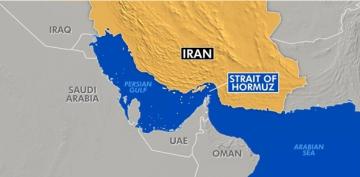 Navid Zarrinnal is an Iranian journalist. He joins us again from Iran to discuss the fragile "cease fire," Trump's threats, the Strait of Hormuz, and how Iran's defense capabilities have frustrated…
 Beliefs in white supremacy and manifest destiny are at the heart of Donald Trump’s actions and his appeal to millions of people.
 “The ever-scheming European imperialists wisely placed Israel where she could geographically divide the Arab world…and also divide the Africans against the Asians.”