“The reason for these military operations was, and still is, to tell the Israeli occupation that we defy it and are willing to resist and go anywhere to express our defiance.”
Imprisonment is one of the most violent and oppressive tools used by the zionist entity for dominating and oppressing Palestinian people. Over the seventy-seven-plus years of colonial occupation and apartheid, the zionist settler state has imprisoned hundreds of thousands of Palestinians in an attempt to humiliate, dehumanize, subdue, and annihilate the population, but also to undermine resistance. Since Operation Al Aqsa Flood on October 7, 2023, imprisonment has increased exponentially: there are currently 10,800 Palestinian political prisoners in zionist prisons; these numbers include 450 children and 49 women. And the zionist sadistic torture regime of prisoners continue with impunity.
But where there is repression, there is always resistance. Fatima Bernawi was one of these Palestinians who dared to resist. An Afro-Palestinian born in 1939 and a victim of the 1948 al-Nakba, Bernawi understood clearly the unfair and inhuman treatment meted out to her people when her family was forced to become refugees in Jordan. Living under a dehumanizing occupation brought her into consciousness, especially as a Black Palestinian woman. Bernawi’s father, originally from Nigeria (her mother was Palestinian-Jordanian), participated in the 1936-1939 Palestinian revolution against the British colonizers, and in defense of Palestine during the al-Nakba. In the 1960s, she joined the Arab Nationalist Movement and was one of the early members of the Fateh Palestinian national liberation movement. In fact, she had a major role in establishing guerilla cells of the Fateh movement in the occupied territories.
Barnawi is considered the “the first prisoner of the contemporary Palestinian revolution.” She was the highest ranking female in the Fateh militia and the first woman to be arrested and imprisoned by zionist military forces after planting explosives in a theater that was to show a film celebrating the 1967 war. Though the explosives were discovered before they detonated, Bernawi, her sister Ishan, and another member of Fateh were arrested. While the others were later released, Bernawi was sentenced to life imprisonment. Bernawi spent more than ten years in prison for her activism “against the nascent occupation and displacement in East Jerusalem, the West Bank, and the Gaza Strip,” which began in June 1967. In the Ramle zionist prison, where Palestinian women resisters were sent, she suffered degradation and humiliation; but she and the other prisoners fiercely fought against their treatment.
Berwani was released in 1977 after much international pressure and due to her deteriorating health. She was deported, but returned to Palestine in the early 1990s, becoming the head of the women’s wing of the Palestinian Police. Berwani passed away in Cairo, Egypt, in 2022 at the age of 83. She remains a powerful symbol both of Palestinian women and Palestinians of African descent in the resistance against white supremacist settler colonial occupation.
The December 1978/January 1979 issue of Palestine Perspectives highlighted the plight of Palestinian women in occupation jails. The issue also carried an interview with Fatima Berwani that focused both on the history of her activism and her experiences in the occupation’s prisons. In honor of Black August, and in solidarity with Black and Palestinian prisoners of war, we reprint the interview below.
Fatima Bernawi: The Tragedy of a People
Following is an account by Fatima Bernawi, a Palestinian who spent ten years in Israeli prisons, of her development as an activist and her subsequent arrest and imprisonment.
My tragedy began with the tragedy of the rest of my people in 1948, when most of my people were sent fleeing from Palestine to the surrounding Arab countries. My family’s place of refuge was a tent in Jordan. As a child, I always wondered “Why was it us? Why did it happen?” I never had an answer. I used to look for Solomon’s Ring thinking I could rub it and the genie would tell me “I'll do anything you want.” Then I could solve my family’s misery.
All sorts of things were in my head as I grew up, but I couldn’t express them. I started working as a nurse in 1955 in Jerusalem. In 1957, I went to Saudi Arabia to work for a Lebanese hospital that dealt with companies like ARAMCO. Besides being Palestinian—and I was _ pushed around because of this—I am black, and many American families used to refuse my care. I suffered both from being Palestinian and being black. In 1959, I worked with UNRWA. in Qualquilya, a city in the West Bank. Qualquilya had been reduced to rubble by the Israelis in 1956 after an Israeli invasion. I had found something I wanted to do: I wanted to rebuild the city for my people.
In 1965, my political life began. I was introduced to the Arab Nationalist Movement and attended lectures and political study groups. I was finding ways to express my anger and my defiance at the Israeli aggression. During that time, however, the Jordanians did not allow any form of political work, be it study or organizing.
In 1967, the war began, and the Israeli Army played a dirty trick. They carried Arab flags and announced on their bullhorns “We are the Arab Army”, and told everyone in Qualquilya to go to the morgue and receive protection against the Israelis. This method was also used in 1948 by the Zionists.
In 1967 and immediately after the Israeli occupation began, we were introduced to the Palestinian National Liberation Movement. Abu Ammar [Yasser Arafat] was on the West Bank, organizing for defiance of Israeli occupation of our homeland. I felt I must resist, and took part in a commando operation in Jerusalem.
But the Israeli soldiers had followed us. They went into my house and arrested all of my family—my father, mother and sister, who was ten years younger than I was. The reason for these military operations was, and still is, to tell the Israeli occupation that we defy it and are willing to resist and go anywhere to express our defiance. I myself was arrested two days after the operation.
When Palestinian women are arrested, they are often taken to cells that have Israeli prostitutes, where they are often physically attacked. This is a calculated policy. The Israeli Officials then say “there was no torture,” but in fact, this is one form of torture, whether physical or psychological.
It is usually said a person is innocent until proven guilty but under the Zionist occupation, if someone is arrested for any reason, or no reason as is often the case, the house where the person lives is blown up, his family is arrested, torture follows, often of the family as well—all before there isa conviction. The day of my arrest, they tortured my family in a nearby cell. I could hear their screams.
After two months, they released my father and mother on bond. However, they kept my young sister for a year. She was detained for only one reason. When the soldiers entered our house and asked “Is Fatima here?” She replied, “I am Fatima.”
After a few months of torture, I was brought to military court in front of three military judges. The sentence was as follows: life term for possessing explosives, life term for the operation, and ten years for being a member of the underground.
We have a great number of sisters in prison. Rasmieh Odeh is one. To begin her torture, they brought her father in, stripped them naked, and tried to force her and her father to have sexual intercourse. Her house has been blown up. She has a life sentence, all for resisting occupation. Her charge was “member of a resistance organization.” Her health is poor and she has ulcers.
When I was released from prison, I went from a small prison to a larger one. I was deported. Now I live in Lebanon, separated from my family and my homeland. But one day I will return.
“Fatima Bernawi: The Tragedy of a People,” Palestine Perspectives 1 no. 8/9 (December 1978/January 1979)

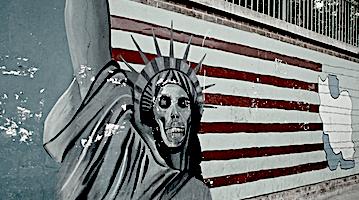
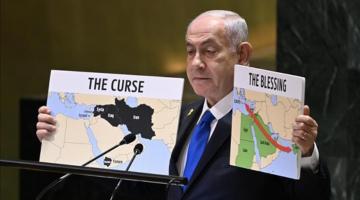
 In this week’s segment, we have an update on the US/Israeli war of aggression against Iran from a journalist reporting from Iran. But we begin with two organizers of the Pan-Africanism Summit Against…
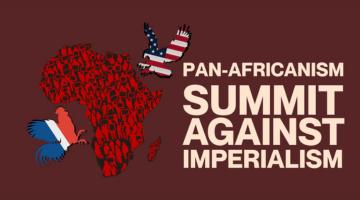 The Pan-Africanism Summit Against Imperialism (PASAI) will be held on May 11 and May 12 in Nairobi, Kenya. It is organized as a counter-summit to the France-Africa summit taking place in Nairobi at…
 Navid Zarrinnal is an Iranian journalist and host of The Colony Archive podcast. He joins us again from Iran to discuss the fragile "cease fire," Trump's threats, the Strait of Hormuz, and how Iran's…
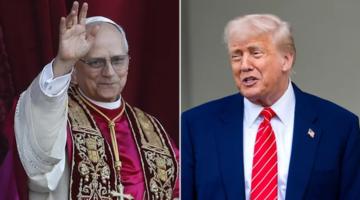 Beliefs in white supremacy and manifest destiny are at the heart of Donald Trump’s actions and his appeal to millions of people.
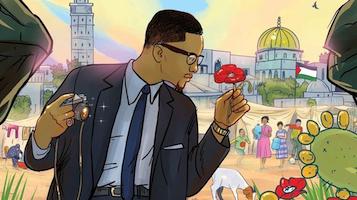 “The ever-scheming European imperialists wisely placed Israel where she could geographically divide the Arab world…and also divide the Africans against the Asians.”