by the Real News Network
VIDEO
Glen Ford on the Real News Network: Wary Cuba Calls For Lifting the Embargo
JESSICA DESVARIEUX, PRODUCER, TRNN: Welcome to The Real News Network. I'm Jessica Desvarieux in Baltimore. And welcome to this edition of the Ford Report. Now joining us from New Jersey is Glen Ford. Glen is the co-founder and executive editor of the Black Agenda Report, and the author of the boo<!--break-->k The Big Lie: An Analysis of U.S. Media Coverage of the Grenada Invasion.
Thanks for joining us, Glen.
GLEN FORD, EXEC. EDITOR, BLACKAGENDAREPORT.COM : Thanks for the opportunity.
DESVARIEUX : So Glen, I know that you just got back from Cuba. It's a story certainly our viewers are tracking. What did you discover while you were over there?
FORD: Well, I had not been to Cuba for 30 years. I went in '84 and '85, so it was another and a new look at the country.
We went with a 100-member tour put together by Code Pink. That's led by Medea Benjamin. It was the second tour this year by Code Pink, and another one's set to go I believe in the fall. And the overwhelming impression that I got, and we had meetings with Cubans from all sectors of society, is that the Cubans want an end to the U.S. embargo so bad they can taste it. And on the face of it, that doesn't seem to be a very good bargaining position for the Cubans to be so very eager to trade. But then, we have to understand that the Cubans have held out for more than half a century of an embargo by this country, and stuck to their principles, and I think we can expect them to stick with those principles a little bit longer.
Cuba needs everything, including more visitation from the North. Their biggest partner, in terms of tourism, is Canada. But even though the laws in the United States specifically prohibit U.S. tourism, all of the Cubans use the same term, tsunami, to describe what they anticipated would be a tidal wave of U.S. tourism to the island. Is that wishful thinking, we'll see. Again, Cuba needs everything.<!--break-->
We went to an agricultural cooperative on the outskirts of Havana, and the leader of the cooperative said that his members looked at the United States as a kind of huge, Home Depot warehouse store. And they can't wait to go shopping in that store to buy the most mundane things, like nails and paint. And when you look around Cuba, you see that the whole place does need a paint job. As I said, I was in Cuba about 30 years ago. But in the interim, of course, the Soviet Union collapsed. Cuba lost 85 percent of its foreign trade. And that meant that its internal economy just about collapsed. And they called that a special period. During that special period, they introduced certain openings to private--small private enterprises. In a way, this special period is still with us, because those openings remained and are now being expanded upon, and more are anticipated as they anticipate a larger arena of trade with the end of the embargo.
And some people, some supporters of Cuba in the United States, believe that this is a kind of slippery slope. I think that the Cuban leadership is very much aware of the dangers of allowing new class structures to reemerge in Cuba. And especially dangerous when we're talking about more interaction with the great Home Depot, the great aggressive Home Depot store to the North.
So we may have to conclude that this period, the one we're in right now, is actually the most dangerous yet for the Cuban revolution.
DESVARIEUX: How do they plan on guarding themselves from going down that slippery slope?
FORD: That is the question. What the Cubans talk about is creating socialism with a market. A socialism in which the state aspect, the socialist aspect of the economy, is firmly in control with the market part of the economy as secondary and subordinate. That's the kind of balance that they're seeking. How does that occur, how can, how can you calibrate that kind of societal transformation? Especially when you're talking about trade and increasing relationships with this very hostile giant right to your north? It's really a tall order.
But you know, Cuba is a hero nation. Very brave. And they're going to take on this challenge as well.
DESVARIEUX : All right. Glen Ford joining us from New Jersey. Thank you so much for being with us.
FORD: Thank you.
DESVARIEUX : And thank you for joining us on The Real News Network.

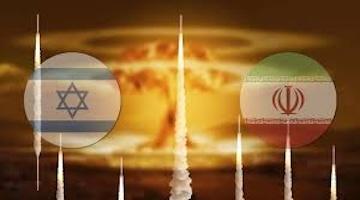 The political fallout from Trump’s recklessness in West Asia continues around the globe, while some wonder how far the radioactive fallout might travel if the war on Iran were to go nuclear.
 The same caucus that celebrated the Emmett Till Antilynching Act refuses to condemn Israel's new death penalty for Palestinians.
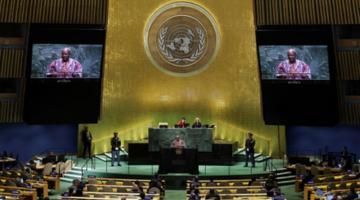 The UN has finally called the transatlantic slave trade the gravest crime against humanity. But the resolution is not reparatory justice, and the nations that voted no or abstained show themselves to…
 Misogynoir, a term meant to name the specific violence against poor and working-class Black women is now being used as a shield for political elites.
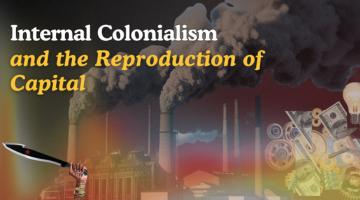 The United States operates as an internal colonial system. Black communities are treated like colonized territories, and the white working class is used as a tool to enforce that control.