The UN has finally called the transatlantic slave trade the gravest crime against humanity. But the resolution is not reparatory justice, and the nations that voted no or abstained show themselves to be the guilty parties.
The UN General Assembly recently adopted a resolution that designates the trafficking of an estimated 13 million Africans to be condemned to generations of enslavement throughout the European colonies in the Americas as "the gravest crime against humanity." By adopting the resolution, the UN legitimizes demands for reparations, including the immediate return of stolen cultural artifacts, formal apologies, and the establishment of bodies and frameworks in the affected countries to meet those demands. It also falls short of providing a legal framework to make that happen, but it is not merely performative.
The Declaration of the Trafficking of Enslaved Africans and Racialised Chattel Enslavement of Africans as the Gravest Crime Against Humanity, introduced by Ghana’s Minister of Foreign Affairs, Samuel Okudzeto Ablakwa, was not simply a product of Ghana’s focus on this issue, but a part of the African Union’s (AU) support of and involvement in the long struggle to address the crimes of the African chattel slave trade. In early 2025, the body voted to declare slavery, deportation, and colonization as crimes against humanity and genocide against the peoples of Africa. They designated 2025 as the Year of Reparations and African Heritage, and declared 2026 to 2035 as the Decade of Action on Reparations. The nations of the Caribbean Community (CARICOM) are also supporting this effort, reflecting a broad coalition of diasporic Africans demanding justice and repair. The resolution was introduced and adopted on 25th March, 2026, the International Day of Remembrance for the Victims of the Transatlantic Trafficking of Africans, with a vote that shows the international consensus on this issue is broader than many in the imperial core believe, and certainly more than the opposition to it wants to accept.
While the UN adoption of this resolution is historically significant, as it not only represents its first official recognition of the slave trade as the greatest crime against humanity, but it condemns the engine of slavery itself as such, and may be a step toward validating previous efforts to address continued violations of human rights against Africans in the U.S. from this centuries-long system brought before the UN, primarily Willian L. Patterson’s We Charge Genocide petition, which the U.S. forced to be sidelined. U.S. politicians and media first disparaged and then ignored the petition as Communist-inspired lies, citing that Patterson and the Civil Rights Congress that produced the petition were part of the Communist Party USA. But U.S. politicians also countered the positive reception it received at the UN by doing what they have always done: making backdoor maneuvers and issuing a few threats to ensure the body never took formal action on the petition, not even to bring it to the floor for debate. When Patterson returned to the US, the U.S. State Department revoked his passport. This time, the U.S. and its colonizing allies could not stop the vote on this resolution.
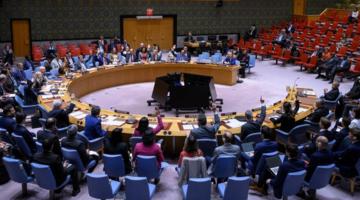
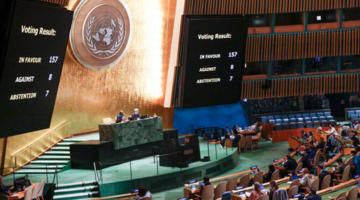
The UN vote reflected 123 nations that affirmed the resolution, with the United States, Israel, and Argentina voting against it, and the United Kingdom and all 27 European Union members abstaining. This bloc of opposition represents not only the former colonizing nations that participated in the chattel slave system in some way, but also their allies who benefited from the wealth those colonizing nations amassed from that inhumane institution in the past and continue to do so today. Their opposition to the resolution reflects the Pan-European, white supremacist, Western-primacy attitudes that gave rise to slavery and the immense wealth and power these nations wielded to dominate the world in the first place, and which they are still trying to protect.
Ghana’s resolution is morally clear in that it labels the transatlantic slave trade the "gravest crime against humanity," as there has been no act of human trafficking of similar scale, duration, and racialized focus on any other group of people or nation before or since. However, the US and its European allies claim that such a designation suggests a hierarchical ranking of historical atrocities.
This position from these nations is hypocritical, as they have done exactly that. They consistently place the Nazi holocaust of European Jews in WWII at the top of their hierarchy of atrocities, giving European zionists rights of settler colonialism and other acts of violence against whomever they consider their existential enemies. The same European nations, though, also rarely recognize the Roma, the disabled, Communists, Socialists, the physically and mentally disabled, the gender non-conforming, and even before the Nazi party existed, the Herero and Nama people of Namibia, as victims of the same holocaust deserving of any recognition, support, or justice. So, of course, these dissenting nations do not recognize Palestinians, Lebanese, Syrians, Congolese, Sudanese, or any group of people Israel decides to target or help others target as their victims today, just like they do not see Africans anywhere as victims of their crime against humanity.
British acting U.N. Ambassador James Kariuki, speaking on behalf of the mainly Western nations that abstained, including some that enslaved Africans, claimed that those nations are committed to addressing modern crimes of slavery, such as trafficking, sexual exploitation, and forced labor. But in the era of the Epstein Files and the international implications of the lack of punishment of those crimes being carried out in most Western countries, and not at all in the United States, this is a particularly odious deflection from addressing the historic and ongoing injustices committed against our ancestors and their descendants.
The resolution explicitly calls for "reparatory justice," which includes a formal apology, compensation, restitution of artifacts, and guarantees of non-repetition. While there have been some efforts to repatriate stolen artifacts from universities and museums to their countries of origin, this is not yet a large-scale action, as these institutions and the nations they serve continue to profit from possessing them. This concern is not adequately addressed in the resolution, in my opinion, as it encourages the African Union (AU), CARICOM, and the Organization of American States (OAS) to collaborate on reparatory justice. While it is true that the AU and CARICOM are firm supporters of this effort, these organizations are themselves dependent upon the U.S. and the other nations that have exploited their people. The AU and CARICOM too often capitulate or pander to Western powers on topics of militarism and “security,” and in relation to Haiti especially. The OAS is located in Washington and is completely under U.S. control. The OAS was expelled from Nicaragua in 2022 because of that organization’s interference in their elections, and is widely mistrusted among anti-imperialists for that activity in other countries. The drafters of the resolution are relying on the colonial institutions and countries that protect the wealth and power amassed and hoarded that originated with human trafficking and chattel slavery. Thieves cannot be trusted to ensure they adequately pay restitution for their crimes.
The US and the EU also cited concerns about the resolution’s attempt to impose legal restrictions and penalties for acts that were not illegal at the time they were committed. This is a morally bankrupt, cynical, legalistic deflection from confronting the basic human rights of African people that their ancestors ignored to profit from trading in human flesh. The institutions in these nations —including colleges, churches, and corporations—profited richly and continue to compound wealth and power from the legacy of the profits of slavery, colonialism, and the legal frameworks created to maintain the economic imbalance of those systems, even when that system was made “illegal” centuries ago.
The U.S. vote against this resolution should not be seen as an aberration of the current administration, however, but as a continuation of long-standing U.S. policy, as opposition to reparations is firmly entrenched in the American political structure.
Most notably, the 2009 U.S. Senate resolution officially apologizing for slavery and Jim Crow laws included an explicit disclaimer stating that the apology could not be used to support any future legal claims or lawsuits for reparations against the U.S. government. The Trump Regime’s vote against this UN resolution and their justifications for it are not new, but a continuation of the refusal of the U.S. and its enslaving, colonizing European friends to accept legal liability for the crime of slavery and its continued legacy. It must be noted that although President Barack Obama praised the Senate apology, despite the lack of legal enforceability, he did not denounce that part of the resolution, and he never issued an apology for slavery from the White House. In fact, no U.S. president has ever issued an apology for the involvement of the U.S. government in the enslavement of our ancestors and the racist physical and legislative violence against their descendants.
While the federal government has always been and remains opposed to the very idea of reparations in any form, some municipalities, such as Evanston, Illinois, and states such as California, are advancing their own limited and often legally challenged reparations efforts. However, the ability of these very limited efforts to address the inequalities that slavery perpetrated throughout the entire country, facilitated by protection, support, and legislation of the federal government, is woefully insufficient at best, and fanciful at most as the system that continues to perpetrate the inequalities is still intact, and still run by people who share the economic and political interests of the “founders:” not to establish equality and freedom, but to establish freedom for the rich to make as much money as they can off the labor of the poor.
Finally, it must be acknowledged that the UN resolution is not legally enforceable, as the UN Charter states that General Assembly resolutions are not legally binding on member states or as international law. UN General Assembly (UNGA) resolutions reflect global consensus on issues that carry political and even moral implications, but do not establish or enforce law against sovereign member states. Although the mechanism and intention may be different, this legal limitation of the UNGA creates the same outcome as the US Congress adding a disclaimer to its apology-for-slavery resolution, stating that it cannot be used to pursue reparations. They both acknowledge centuries of crimes against humanity, but they also contain a legal escape hatch that prevents any real liability from being pursued. Both admit crimes were committed, but both keep the criminals from having to actually pay for those crimes. But even if the UNGA could pursue such actions, it must be noted that UN Security Council (UNSC) resolutions are legally binding and enforceable under the UN Charter. Though it is difficult to believe that the UN would actually enforce anything beneficial to the people, and not its settler colonial, genocidal, enslaving, white domination, permanent UNSC member, the United States, as we have clearly seen over at least the past three years.
However, the UN resolution is not pointless. Though it cannot be used to sue any country for reparational justice, it is a critical political event that exposes the alignment of nations on the world stage regarding the ongoing struggle for the liberation of African peoples. The votes in favor of it from the 153-member coalition were dominated by Global South nations, reflecting a powerful expression of solidarity with the descendants of enslaved Africans throughout the diaspora and the world. It represents not only support of the struggle against racialized oppression among the racialized and otherwise oppressed people of the Global South, but it also reflects the reality of the struggle at hand in the world today–the struggle against the oppressors and the status quo they are desperate to maintain, against the oppressed and the new world without that oppression and the oppressor class we deserve to have.
The resolution’s success and usefulness lie in its expression of international unity, providing the moral and political foundation for a deeper, systemic struggle against the legacy of slavery and imperialism. This fight must be a unified effort led by the working class, poor, oppressed people of the world, and those people must be unified across geographical, ethnic, class, and all divisions that serve to keep the settler colonial pedophile human trafficking class of every nation in power. The resolution is an invitation for Africans in the Americas to connect with one another, align with their kin and collaborators in the rest of the Global South, and with other anti-colonial nations in the global struggle against imperialist hegemony.
Because it is only together that we will win.
Jacqueline Luqman is a radical activist based in Washington, D.C.; as well as co-founder of Luqman Nation, an independent Black media outlet that can be found on YouTube (here and here) and Facebook.



 In this week’s segment, we have an update on the US/Israeli war of aggression against Iran, from a journalist reporting from Tehran. But we begin with a discussion with two organizers of the Pan-…
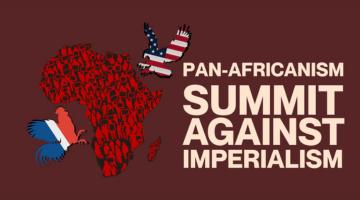 The Pan-Africanism Summit Against Imperialism will be held in Nairobi, Kenya, on May 11 and May 12. It is organized as a counter-summit to the France-Africa summit taking place in Nairobi at the same…
 Navid Zarrinnal is an Iranian journalist and host of The Colony Archive podcast. He joins us again from Iran to discuss the fragile "cease fire," Trump's threats, the Strait of Hormuz, and how Iran's…
 Beliefs in white supremacy and manifest destiny are at the heart of Donald Trump’s actions and his appeal to millions of people.
 “The ever-scheming European imperialists wisely placed Israel where she could geographically divide the Arab world…and also divide the Africans against the Asians.”