“I do not have a dollar in the United States. There is no account to freeze for me.” - Colombian President Gustavo Petro, solidarity rally in Bogota, 10/24/2025
As part of his escalating aggression toward Venezuela, Colombia, Cuba, and Brazil, Donald Trump ordered his Treasury Department to sanction Colombian President Gustavo Petro, his wife Verónica Alcocer, his son Nicolás Petro, and Colombian Interior Minister Armando Benedetti for drug trafficking offenses. The Treasury Department announced the sanctions on October 24, five days after Petro accused Trump of murdering Alejandro Carranza in a mid-September 2025 US military strike on his small fishing boat in Colombian territorial waters.
Trump tried to justify killing Carranza with the unproven allegation that he was trafficking drugs. As of October 24, the US had murdered 43 alleged drug traffickers by bombing small boats in the Caribbean, without any due process.
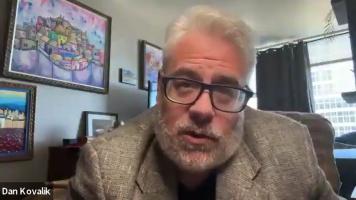
I spoke to human rights attorney Dan Kovalik, who is representing Petro and his inner circle in contesting the sanctions.
ANN GARRISON: Dan, can you explain the significance of the new US sanctions on Gustavo Petro, his family, and his Interior Minister? Sanctions are primarily foreign asset freezes and travel restrictions, but Petro responded, in a fiery speech, that he has no assets for the US to seize and no desire to do business in the US. The US had already revoked his visa for a speech he made to pro-Palestinian protestors outside the UN General Assembly in September, so the travel restrictions are irrelevant.
Don’t these sanctions indirectly target the Colombian people, and how are they likely to suffer as a result?
DAN KOVALIK: Experience shows that such sanctions can adversely impact a country like Colombia because they inevitably keep companies and financial institutions from doing any business with that country for fear of being sanctioned themselves. This problem is known as “overcompliance,” which is often the intention of the sanctions in the first place. It leads to inflation, a shortage of necessary goods (including food and medicine), and an undermining of the economy generally.
The hope of the US in imposing these sanctions is to vilify the sanctioned leader, squeeze the population, and thereby encourage regime change.
AG: Trump included Colombia on its list of “Major Drug Transit or Major Illicit Drug Producing Countries for Fiscal Year 2026,” but this is nothing new. James Broward just published a devastating piece, “The Sordid History of US ‘Aid’ to Colombia,” which included the Clinton Administration’s aerial spraying of chemicals so toxic that even their manufacturer, Dow Chemical, strongly protested. Meanwhile, in the last year of the Clinton Administration, the wife of his top military official in Colombia, Colonel James Hiett, was convicted of using diplomatic pouches to smuggle cocaine and heroin to the US, and he was convicted of hiding the crime and laundering the profits.
Coca growing and cocaine production continued to climb under Petro’s extreme right-wing, Zionist predecessor, Iván Duque Márquez, but he wasn’t sanctioned. While Duque was in power, Biden even designated Colombia a “Major Non-NATO Ally,” an alliance Petro dismantled to ally instead with Venezuela and its president, Nicolás Maduro.
So these sanctions are clearly politically motivated. What else would you say is motivating US hostility to Petro?
DK: I think there are a number of reasons for this hostility, including Petro’s outspoken advocacy for the Palestinian people, his criticism of Israel, and his opposition to US intervention in the region. For the first time in Colombia’s modern history, it is an independent nation instead of a US beachhead, and this has incensed the powers that be in the US.
Petro has also moved to exert more state control over resource extraction and electricity production, which of course alarms multinational corporations. He hasn’t nationalized any natural resources, but he has halted new exploration contracts on oil, gas, and coal; increased taxes on the fossil fuel industry; increased environmental protections in the extractive industries; initiated a domestic transition to renewable energy; and sought to end large-scale, environmentally damaging open-pit mining in favor of small-scale, traditional mining.
He also seems to have sought, thus far unsuccessfully, to reduce the cost of electricity, which he identifies as a major cause of inflation.
AG: What specific offenses are Petro, his family, and his Interior Minister charged with? Do they include not only failure to stop the drug trade but also direct involvement?
DK: It appears that they are being accused of being part of some (imaginary) drug cartel and allegedly receiving money from this cartel. However, these claims seem to be based on the claims of one individual facing prosecution in the US for his own drug crimes and in return for some sort of leniency. The truth is that Petro has been fighting the drug cartels for his entire political career and is probably the cleanest politician Colombia has had as president in recent memory.
AG: How will you undertake their defense? Will you actually be in US courts?
DK: The challenge to the Office of Foreign Asset Control (OFAC) designation begins with a detailed letter to the Treasury Department but will likely lead to court action to challenge the Treasury Department’s decision.
AG: I believe the three levels of the federal court system are district court, then circuit court, the first level of appeal, and then the Supreme Court. Are you prepared to appeal all the way to the Supreme Court if you don't get just rulings at the two lower levels?
DK: I’ll go as far as President Petro wishes to go, but we haven’t decided that far at this point.
AG: Petro has adopted a new strategy for eradicating drug production. He’s focusing on rural development to create economic opportunity beyond coca growing and negotiating with armed groups. He’s also pointed to the US market for illicit drugs that’s driving the traffic, saying that producing states like Colombia shouldn’t bear all the blame.
Trump of course condemns this approach, but will you be bringing it up in your defense? Whether it’s wise or effective policy or not, it indicates the will to stop the trade rather than tolerating, abetting, or even engaging in it.
DK: Yes, Petro is fighting the drug trade through the most effective and nonviolent means at his disposal, and we will, of course, raise this in his defense.
As the Rand Corporation demonstrated years ago, the most effective means of fighting the cocaine traffic is through treatment programs within the country consuming it – in this case, the United States. Indeed, it said that this is many times more effective than eradicating the drugs at their source (whether the source is Colombia or elsewhere). However, no US President or Congress has had the political will to try this strategy.
AG: What else would you like readers to understand about this case?
DK: The sanctions against Petro are part and parcel of the US’s attempt to impose its will on the people of South America and the Caribbean. This is a modern-day manifestation of the Monroe Doctrine of 1823, a doctrine that remains in force to this day. However, the region cannot be subdued as it has been in the past, and I believe this policy will ultimately backfire, but many will suffer in the meantime.
AG: Is there anything we can do to support you, the Petro family, and the Colombian people in this?
DK: I would urge people to protest these maneuvers by the Trump Administration and to contact their Congressional Representatives to express their dismay at them.
AG: Thanks for speaking to Black Agenda Report.
DK: Happy to.
Ann Garrison is a Black Agenda Report Contributing Editor based in the San Francisco Bay Area. In 2014, she received the Victoire Ingabire Umuhoza Democracy and Peace Prize for her reporting on conflict in the African Great Lakes region. She can be reached at ann@anngarrison.com. You can help support her work on Patreon.
Daniel Kovalik is a lawyer focusing particularly on human rights and a prolific author. He taught International Human Rights Law at the University of Pittsburgh from 2012-2023. His most recent books are "The Case for Palestine: Why it Matters and Why You Should Care," and "Syria: Anatomy of a Regime Change."

 In this week’s segment, we have an update on the US/Israeli war of aggression against Iran from a journalist reporting from Iran. But we begin with two organizers of the Pan-Africanism Summit Against…
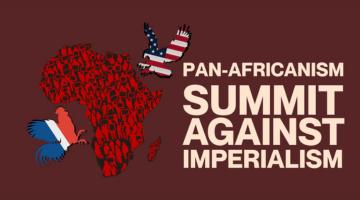 The Pan-Africanism Summit Against Imperialism (PASAI) will be held on May 11 and May 12 in Nairobi, Kenya. It is organized as a counter-summit to the France-Africa summit taking place in Nairobi at…
 Navid Zarrinnal is an Iranian journalist and host of The Colony Archive podcast. He joins us again from Iran to discuss the fragile "cease fire," Trump's threats, the Strait of Hormuz, and how Iran's…
 Beliefs in white supremacy and manifest destiny are at the heart of Donald Trump’s actions and his appeal to millions of people.
 “The ever-scheming European imperialists wisely placed Israel where she could geographically divide the Arab world…and also divide the Africans against the Asians.”