In this series, we ask acclaimed authors to answer five questions about their book. This week’s featured author is Anima Adjepong. Adjepong holds a position as Assistant Professor of Women's, Gender, and Sexualities Studies at the University of Cincinnati. Their book is entitled Afropolitan Projects: Redefining Blackness, Sexualities, and Culture from Houston to Accra.
Roberto Sirvent: How can your book help BAR readers understand the current political and social climate?
Anima Adjepong: Afropolitan Projects is interested in everyday cultural power struggles. It takes what may seem like trivial things – a prayer, a song, or a piece of art – and in conversation with the producers and consumers of these materials, seeks to understand the broader meaning and material implications of these cultural items. For example, a prayer at a U.S. Independence Day picnic opened space to examine the construction of a shared cultural lineage between Ghanaian immigrants and White Christian America. An unlikely alliance. This prayer, which articulated Abraham Lincoln and George Washington as Ghanaian forefathers, revealed how a colonial inheritance continues to shape fundamentalist beliefs about Ghanaian cultural identity and global belonging. In Ghana, the Church of Pentecost recently released a video, which I understand to be a form of colonial nostalgia. The video is a brazen celebration of Christian nationalism and justification for a deeply homophobic and patriarchal orientation to what it means to be Ghanaian. My book’s examination of these issues sheds light on how these large cultural struggles show up in the everyday. I also spend meaningful time highlighting responses to these forms of domination to show that while dominance is reproduced in the everyday, people also challenge oppression and find a different path. As such, I hope the book offers encouragement for those fighting the good fight.
What do you hope activists and community organizers will take away from reading your book?
One of the book’s epigraph’s is an Akan proverb, an adinkra that translates into English as, “when you climb a good tree, you receive a push.” The proverb represents support for doing good work. Throughout the book, I highlight people coming together to challenge the status quo and offer alternative paths to oppressive ideas about Blackness, Ghanaian identity, sexuality, and global belonging, among other things. I felt inspired by some of the cultural work I was allowed to observe and take part in. Perhaps I am not supposed to say this, but one of the most inspirational groups I got to learn from was Drama Queens, a pan-African feminist group that uses theatre, public education, and conversation to teach diverse audiences about gender, sexuality, African spirituality, and so much more. From Drama Queens members, I saw a thoughtful intervention on a postcolonial landscape fraught with myriad issues including class tensions, shame about race, sexuality, and religion, as well as struggle obtaining funding. I saw how members of the collective challenged themselves and others to engage these issues at home and in conversation with activists across the continent. It was exciting. I hope that activists and organizers will read this book, and as they do, I hope they will be inspired by the wins, both large and small. I also hope that those who do not yet see themselves as activists or organizers might find the motivation to join a community in pursuit of social change. Because at the root of this book are various communities coming together to materialize expansive ideas about what it means to be African in the world today.
We know readers will learn a lot from your book, but what do you hope readers will un-learn? In other words, is there a particular ideology you’re hoping to dismantle?
The book’s deep dive into the quotidian lives of Ghanaians offers an alternative to narratives about African exceptionalism. Africans are either exceptional as uniquely advanced (rarely) or outstanding in their proximity to nature and the world before now, that is, Africans are exceptionally not modern. As an example, in the immigrant context, Africans (primarily Nigerians) in the U.S. are touted as extraordinary Black people. This exceptionalism, as scholars like Jemima Pierre have shown, is an excuse to sustain racist ideas about Black Americans. On the other hand, Africans are also often shown as deeply spiritual and closer to nature (as if these are bad things). Sometimes, an African country, such as Ghana, will be highlighted as exceptional because it is “the most politically and economically stable country in sub-Saharan Africa.” These ideas about the continent, its people and cultures are sustained by colonial ideas and reproduced by antagonistic and sympathetic actors alike. Yet spending time intimately with Africans, whether immigrants in the United States or living at home on the continent, shows us that, like everyone else, there is nothing particularly exceptional about Africans. To say this is not a diss, but rather to call attention to how Africans’ hold both conservative and progressive politics, transcendent and banal ideas, and have desires just like everyone else. I hope that the stories in my book help readers confront and unlearn their colonial ideas about African exceptionalism and begin to imagine grounded forms of transnational and diasporic solidarity.
Who are the intellectual heroes that inspire your work?
There are certain scholars whose work I return to over and over again because they challenge me and refine my thinking. Foremost is M. Jacqui Alexander. I just cannot get over her! I think I probably cite her in everything I write. Her scholarship is foundational to my thinking because she teaches me what a spiritually grounded, erotic sociology can look like. I can’t think of anyone else who has shaped my thinking more. Right now, I am also inspired by, and thinking with, Ana Maurine Lara’s work, particularly her book Queer freedom: Black Sovereignty, which for me, embodies scholarship as ceremony. I aspire to produce work like that. There are many others, but right now, I am sitting most closely to these two.
In what way does your book help us imagine new worlds?
In the book Uncut Funk: A contemplative dialogue, bell hooks says to Stuart Hall, “our imagination is where our strength to resist lies.” That quote stayed with me and is one of the book’s epigraphs. The cultural projects that some of my interlocutors engage imagine new worlds. I was inspired by their creative strategies of resistance. I think that the pleasure-filled everydayness of some of these strategies might be the most salient for me. A joke, a lyric, a photograph, or batik design become an avenue to imagine so much more. Recognizing this, I opened each section of the book with some cultural material – whether a passage from Ama Ata Aidoo or a painting by Sel Kofiga – as a window into something else, something beyond the text. I hope these windows, as much as the narratives I share from my interlocutors, can also help readers to imagine otherwise.
Roberto Sirvent is editor of the Black Agenda Report Book Forum.


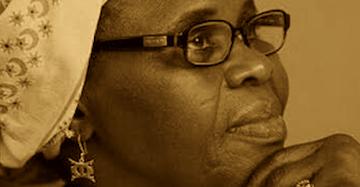
 In this week’s segment, we have an update on the US/Israeli war of aggression against Iran from a journalist reporting from Iran. But we begin with two organizers of the Pan-Africanism Summit Against…
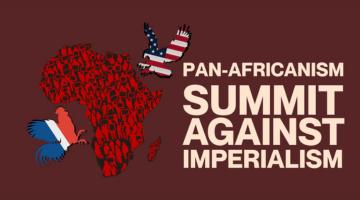 The Pan-Africanism Summit Against Imperialism (PASAI) will be held on May 11 and May 12 in Nairobi, Kenya. It is organized as a counter-summit to the France-Africa summit taking place in Nairobi at…
 Navid Zarrinnal is an Iranian journalist and host of The Colony Archive podcast. He joins us again from Iran to discuss the fragile "cease fire," Trump's threats, the Strait of Hormuz, and how Iran's…
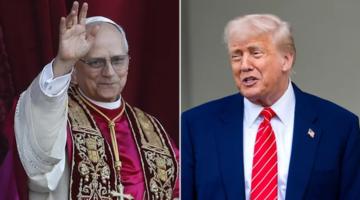 Beliefs in white supremacy and manifest destiny are at the heart of Donald Trump’s actions and his appeal to millions of people.
 “The ever-scheming European imperialists wisely placed Israel where she could geographically divide the Arab world…and also divide the Africans against the Asians.”